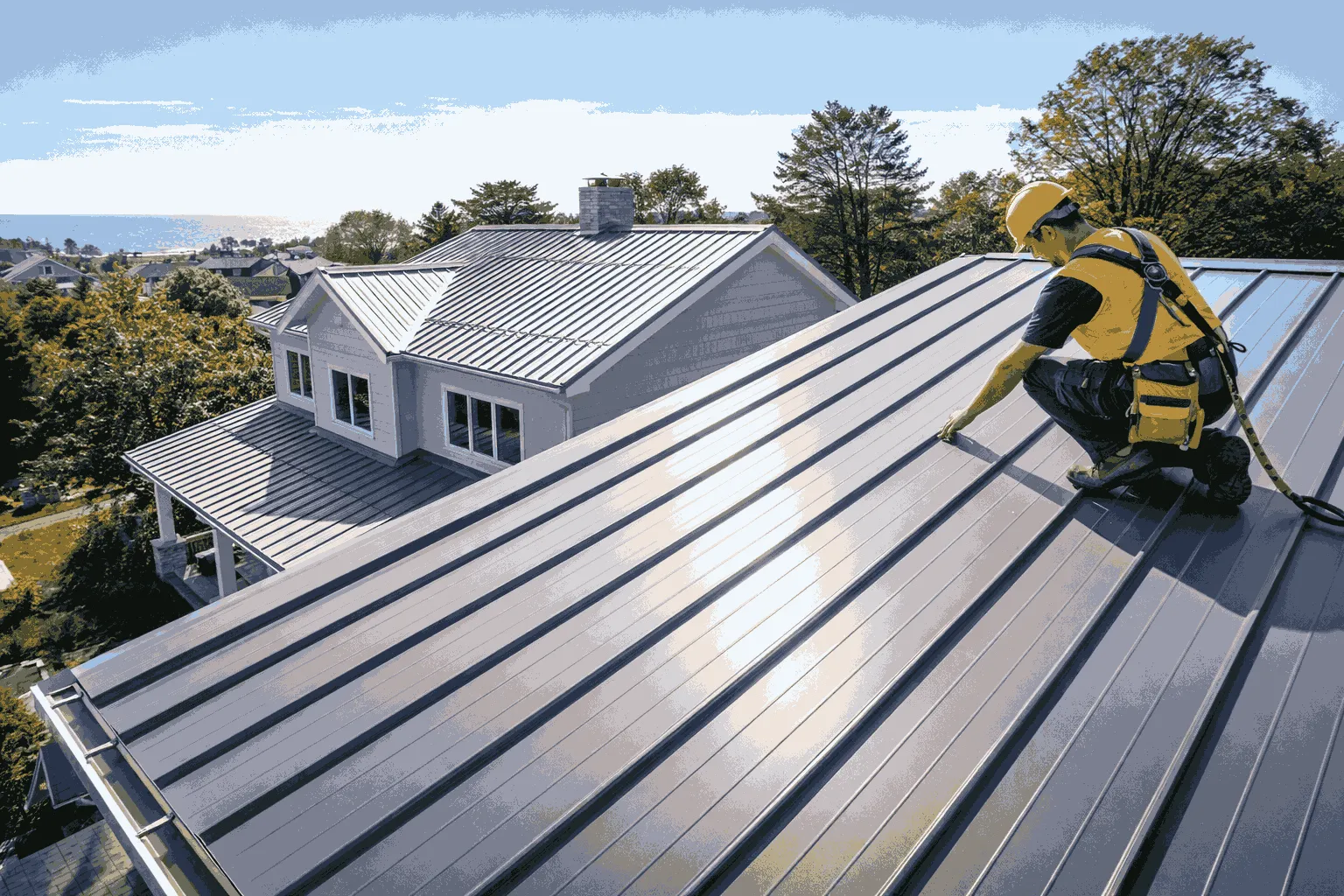
At the beginning of 2024, the average cost to install a standing seam metal roof was approximately $16,150. However, this number can vary widely depending on factors such as roof size, pitch, metal type, panel profile, and local labor rates. Because metal roofing represents a significant investment, accurate planning becomes essential. One of the most common and costly mistakes homeowners and contractors make is miscalculating the number of metal roofing sheets required for a project.
Ordering too few sheets leads to delays, rushed reorders, and mismatched materials. Ordering too many wastes money and leaves you with excess material that cannot always be returned. This is why understanding how to calculate metal roofing sheets correctly is a critical step in achieving a smooth, budget-friendly, and stress-free roofing installation.
This guide explains what corrugated metal sheets are made of, how much they weigh and cost, how wide they come, how to calculate the correct quantity for your roof, and how installation details affect material requirements. Whether you are a homeowner planning a renovation or a contractor preparing a bid, this guide helps you make informed decisions.
What Are Corrugated Metal Sheets Made Of?
Corrugated metal roofing sheets are most commonly made from galvanized steel. Galvanization is a process where mild steel is hot-dipped into a zinc bath, creating a protective coating that prevents corrosion. This coating significantly increases the lifespan of the metal and makes it suitable for long-term outdoor exposure, especially in roofing applications.
The corrugation itself is created through cold rolling, where the steel is formed into a linear ridged pattern. This ridged design increases bending strength in a direction perpendicular to the corrugations, allowing thinner metal sheets to support heavier loads without bending or sagging. This structural efficiency is one of the reasons corrugated metal roofing remains widely used in residential, agricultural, and commercial construction.
In addition to galvanized steel, corrugated metal sheets are also manufactured using aluminum and copper. Aluminum sheets are naturally corrosion-resistant and lightweight, making them ideal for coastal environments. Copper sheets, while significantly more expensive, offer unmatched longevity and develop a protective patina over time.
How Much Does a Sheet of Metal Roofing Weigh?
The weight of a metal roofing sheet depends on its material, thickness (gauge), and dimensions. A standard 3-foot by 12-foot galvanized steel sheet typically weighs between 40 and 80 pounds. Thicker gauges naturally weigh more due to increased metal content.
Aluminum roofing sheets weigh considerably less than steel, which makes them easier to handle during installation and reduces structural load on the roof framing. This can be an important factor for older homes or structures with limited load capacity.
Weight matters not only for installation safety but also for logistics. Heavier sheets may require additional labor, lifting equipment, or delivery considerations. Understanding sheet weight helps you plan installation timelines and manpower more accurately.
How Much Does a Sheet of Metal Roofing Cost?
Metal roofing sheet costs vary based on material type, thickness, coating quality, and market conditions. On average, galvanized steel sheets cost between $2 and $6 per square foot, making them the most budget-friendly option.
Aluminum sheets typically range from $3 to $8 per square foot due to their corrosion resistance and lightweight nature. Copper sheets often exceed $10 per square foot and are considered a premium architectural material rather than a standard roofing solution.
It is important to remember that sheet cost is only one part of the total roofing budget. Fasteners, underlayment, trim, flashing, and labor all contribute to the final project cost. Accurate sheet calculation helps control at least one major variable in that equation.
How Wide Are Metal Roofing Sheets?
Metal roofing sheets are manufactured in a wide range of widths to accommodate different roofing styles and project needs. Common widths range from 12 inches to 60 inches.
For residential applications, sheets between 18 and 24 inches wide are most commonly used. These sizes balance ease of handling with effective coverage. In larger commercial or agricultural buildings, sheets may range from 24 to 36 inches wide to reduce the number of seams and minimize potential leak points.
When calculating coverage, it is important to account for overlap. The effective coverage width of a sheet is always less than its full width due to side laps required for proper water shedding.
Types of Metal Roofing Sheets
Choosing the right metal roofing material depends on budget, climate, and design preferences. Each metal type offers distinct advantages and trade-offs.
Aluminum Roofing
Aluminum is lightweight, corrosion-resistant, and highly reflective. These qualities make it an excellent choice for coastal regions and humid climates. Aluminum roofing helps reduce heat absorption, contributing to energy efficiency in warmer areas.
Copper Roofing
Copper is one of the most durable roofing materials available. Over time, it develops a natural patina that protects the metal and creates a distinctive appearance. Copper roofs can last more than 100 years, but their high cost limits their use to high-end residential or architectural projects.
Tin Roofing
Traditional tin roofing has largely been phased out. Modern “tin roofs” are usually steel products marketed under a familiar name. While historically popular, true tin is rarely used today due to advances in steel manufacturing.
Zinc Roofing
Zinc roofing combines durability with visual appeal. Like copper, zinc develops a patina that protects the metal over time. Zinc roofs can last over 80 years, but their higher cost places them in the premium category.
Steel Roofing
Steel is the most widely used metal roofing material. It is durable, affordable, and available in a wide variety of finishes and profiles. Steel roofing offers strong resistance to impact and weather while remaining cost-effective for most homeowners.
Metal Roofing Installation Tips That Affect Material Calculations
Accurate sheet calculation depends on understanding how metal roofing is installed. Installation details directly impact how many sheets you need.
How to Cut Metal Roofing Sheets Correctly
Precise cutting ensures proper fit and reduces waste. Required tools include safety goggles, gloves, a tape measure, chalk line or marker, tin snips for thin sheets, and a circular saw with a metal-cutting blade for thicker panels.
Begin by measuring the area carefully and marking the cut line. Secure the sheet on sawhorses or a workbench to prevent movement. Cut slowly along the marked line. After cutting, smooth sharp edges with a metal file or grinder to prevent injury and ensure clean installation.
Improper cuts often lead to wasted sheets, which is why cutting accuracy should be factored into material planning.
How to Install Metal Roofing Sheets
Before installation, the roof deck must be clean and free of debris. The first sheet is placed square to the roof edge, typically with about one inch of overhang to allow proper water runoff.
Sheets are secured using metal roofing screws placed at recommended intervals, often every 24 inches. Subsequent sheets overlap according to manufacturer specifications to ensure watertight seams.
Alignment is critical. Poor alignment can force additional cuts, increase waste, and compromise water drainage. Once all sheets are installed, joints and penetrations are sealed, and fasteners are checked for tightness.
How Many Screws Are Needed Per Sheet of Metal Roofing?
Fastener quantity is another calculation homeowners often underestimate. A standard 3-foot by 12-foot metal roofing sheet typically requires at least 20 screws. Screws are placed along the top edge and down both sides, with additional fasteners in high-wind zones.
Regions prone to storms or hurricanes often require higher fastener density. Always follow local building codes and manufacturer recommendations.
How to Calculate the Metal Needed for Your Roofing Project
Accurate calculation starts with measuring the roof area. For flat roofs, multiply length by width. For sloped roofs, apply a pitch multiplier to account for the additional surface area created by slope.
Next, determine the effective coverage area of a single metal sheet, accounting for overlap. Divide the total roof area by the sheet’s coverage area. Always round up to the nearest whole sheet.
Add at least 10 percent extra material to account for waste, cutting errors, and future repairs. Complex roof designs with valleys, dormers, or multiple penetrations may require additional material beyond the standard allowance.
Online metal roofing calculators can provide quick estimates, but manual verification is recommended for accuracy.
Common Mistakes When Calculating Metal Roofing Sheets
Many projects fail due to small planning errors. Common mistakes include ignoring overlap loss, underestimating waste, failing to account for roof pitch, and overlooking trim and flashing needs.
Another frequent mistake is ordering based on full sheet width rather than effective coverage width. This error alone can result in a shortage of materials halfway through installation.
Conclusion
Calculating the correct number of metal roofing sheets is one of the most important steps in planning a roofing project. Proper calculation prevents delays, controls costs, and ensures smooth installation. By understanding roof dimensions, sheet coverage, pitch factors, and waste allowances, you can confidently order the right amount of material.
Careful planning upfront saves time, money, and frustration later. Always round up, allow for waste, and verify calculations before placing an order.