Have you ever wondered whether a metal roof is magnetic and if that affects your home’s safety? Metal roofs are rising in popularity, but there are some myths surrounding them. Let us clear up the magnetic mystery. This confusion leads to several myths, mainly involving lightning, rust, and roof longevity. The truth is much simpler: magnetism comes down to material composition, not weather or installation.
Understanding the science behind magnetic properties helps clarify these concerns. According to the National Roofing Contractors Association, metal roofing has become increasingly popular due to its durability and energy efficiency. Yet, misconceptions about metal roofing’s magnetic properties persist in the industry.
In this guide, we break down the science behind magnetic metals and explain what it actually means for roofing performance.
What Does “Magnetic” Actually Mean in Roofing Materials?
Magnetism refers to a material’s ability to attract or interact with a magnetic field. This property is determined by a metal’s atomic structure and electron alignment, not by external conditions such as climate or roof exposure.
There are three primary magnetic classifications relevant to roofing materials:
-
Ferromagnetic materials – strongly attracted to magnets (e.g., iron and steel)
-
Paramagnetic materials – very weak magnetic attraction (e.g., aluminum)
-
Diamagnetic materials – slightly repelled by magnets (e.g., copper and zinc)
Whether a metal roof is magnetic depends entirely on which category its base material falls into.
Magnetic vs. Non-Magnetic Metals
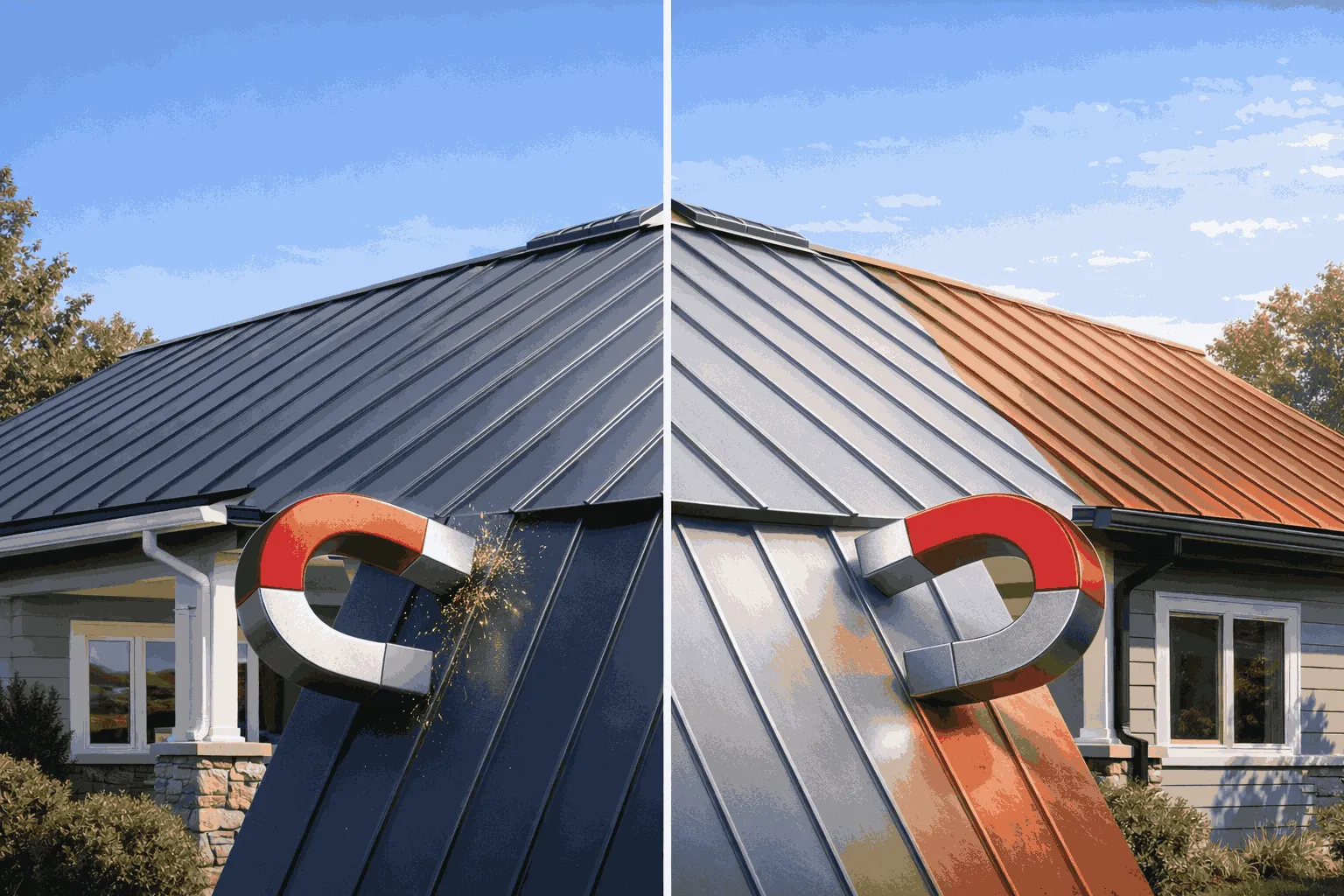
Not all metal roofing materials behave the same when it comes to magnetism. The magnetic properties of a roof depend entirely on the base metal used, not on coatings, paint, or exposure to weather. Some roofing metals contain iron and are naturally magnetic, while others are made from non-ferrous metals and show little to no magnetic response. Understanding these differences helps homeowners choose the right roofing material based on performance, environment, and long-term durability.
Steel Roofing — Magnetic
Steel contains iron, making it ferromagnetic. Even when steel is galvanized, painted, or coated with aluminum-zinc alloys (such as Galvalume), it remains magnetic because the core metal is iron-based.
Aluminum Roofing — Nearly Non-Magnetic
Aluminum is paramagnetic and exhibits almost no magnetic behavior in everyday conditions. This makes aluminum roofing effectively non-magnetic for residential and commercial applications.
Copper and Zinc Roofing — Completely Non-Magnetic
Copper and zinc are diamagnetic metals, meaning they naturally resist magnetic influence. These premium roofing materials are entirely non-magnetic and maintain that property for their entire lifespan.
Why Most Modern Metal Roofing Materials Are Not Magnetic
Modern roofing trends increasingly favor non-ferrous metals such as aluminum, copper, and zinc. This shift is driven by several practical advantages:
-
Superior corrosion resistance, especially in coastal or humid environments
-
Longer lifespan, often exceeding 50–100 years
-
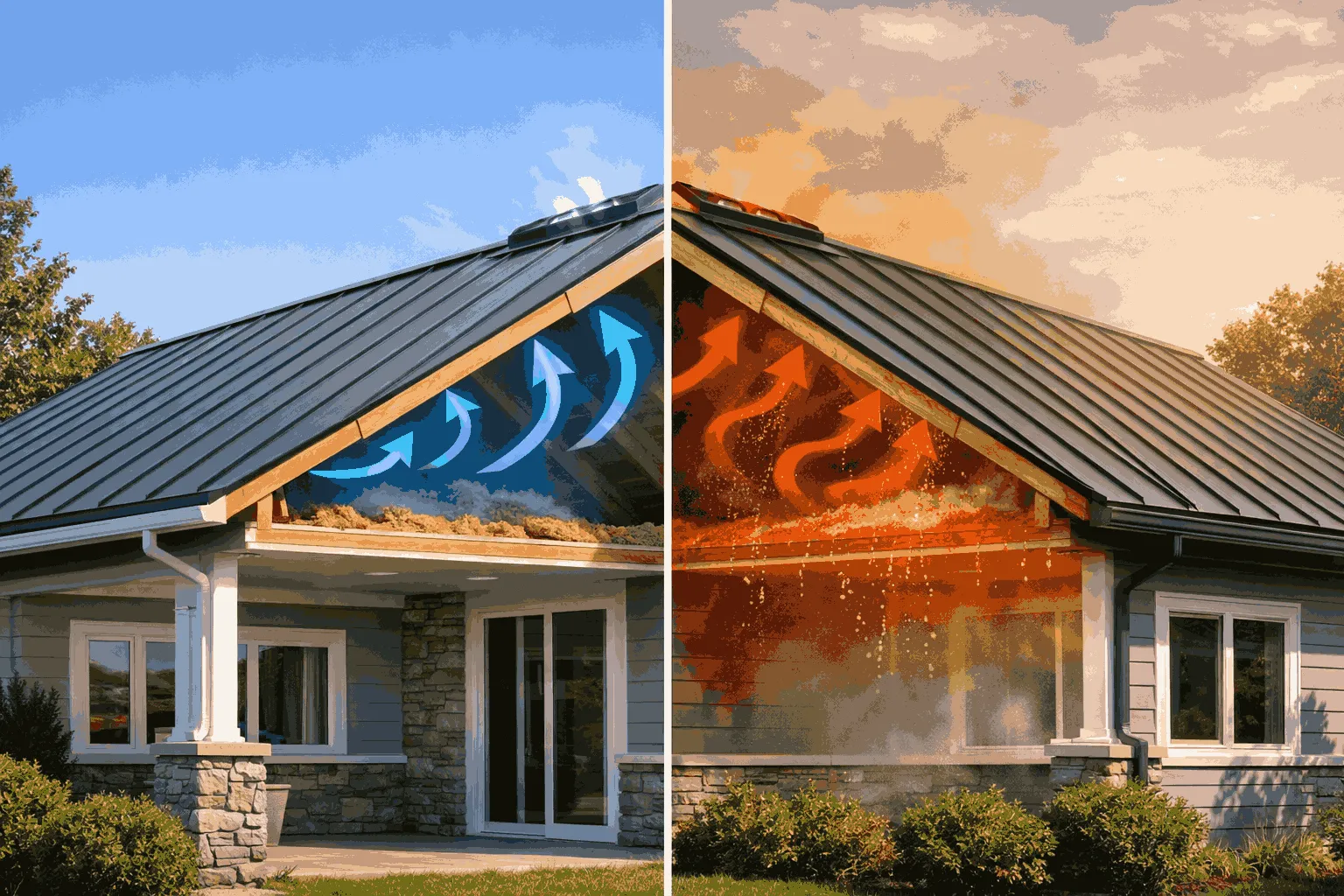
High energy efficiency, thanks to reflective surfaces and modern coatings
-
Lower maintenance requirements, reducing long-term ownership costs
Even steel roofs today are manufactured with advanced coatings that significantly improve durability and weather resistance, though the underlying steel core remains magnetic.
Metal Roofing Materials with the Strongest Magnetic Response
Among all roofing materials, steel-based roofs exhibit the strongest magnetic response. Galvanized steel remains highly magnetic despite its zinc coating. Weathering steel, designed to form a protective rust layer, also retains strong magnetic properties.
Stainless steel roofing varies depending on alloy composition. Austenitic stainless steels are nearly non-magnetic, while ferritic stainless steels retain noticeable magnetism due to higher iron content.
Magnetic Characteristics Comparison
| Roofing Material | Magnetic Response |
|---|---|
| Galvanized Steel | Strong |
| Weathering Steel | Strong |
| Stainless Steel (Ferritic) | Moderate |
| Stainless Steel (Austenitic) | Low |
| Aluminum | Very Low |
| Copper | None |
| Zinc | None |
Common Myth: Do Metal Roofs Become Magnetic Over Time?
A common misconception suggests that metal roofs become more magnetic as they age or rust. This belief is incorrect.
Magnetism is an intrinsic material property that does not increase over time. In fact, rust (iron oxide) is less magnetic than pure iron, meaning oxidation slightly reduces magnetic response rather than enhancing it.
Weathering, corrosion, and environmental exposure do not create or intensify magnetism in metal roofing materials.
Does Magnetism in a Metal Roof Attract Lightning?
No — magnetism does not attract lightning. Lightning is influenced by height, electrical conductivity, and the path of least resistance, not magnetic properties.
Metal roofs are actually considered safer during lightning events because they disperse electrical charge efficiently and reduce fire risk when properly grounded. Both magnetic steel roofs and non-magnetic aluminum roofs conduct electricity effectively, making them equally safe in lightning-prone regions.
Conclusion
The magnetic behavior of metal roofing materials is determined solely by their elemental composition. Steel roofs are magnetic due to iron content, while aluminum, copper, and zinc roofs are non-magnetic.
Modern roofing choices increasingly favor non-magnetic materials for their durability, corrosion resistance, and longevity. However, magnetic steel roofing remains a cost-effective and reliable option when installed correctly.
Concerns about magnetism affecting lightning risk, corrosion, or roof performance are unfounded. Understanding the science behind metal roofing allows homeowners to focus on real factors such as lifespan, maintenance, and energy efficiency.