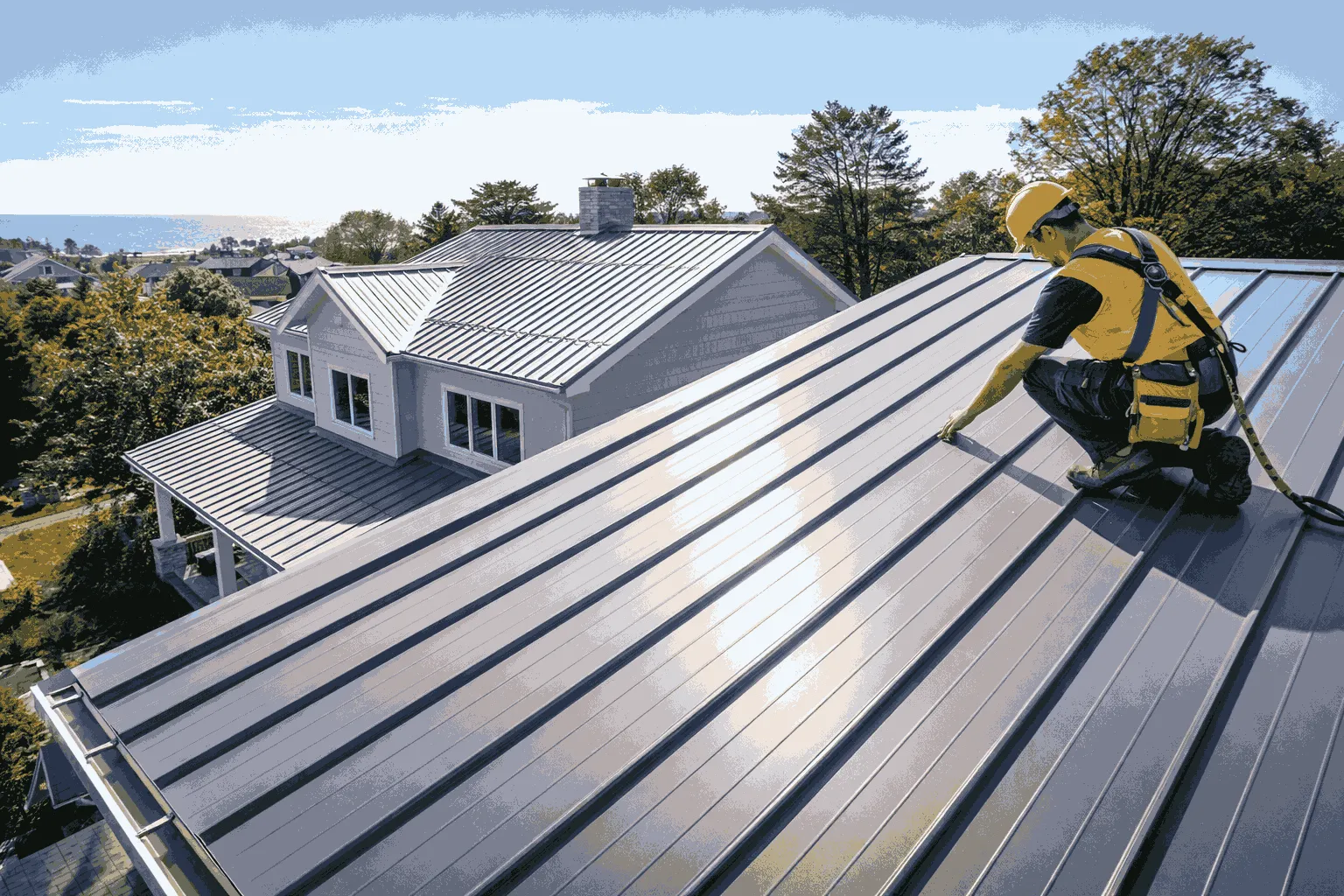
If you are considering a metal roof or already have one installed, you have likely wondered: Do metal roofs need ventilation? The answer is yes, proper ventilation is essential for metal roofs, just as it is for traditional roofing materials. Without adequate airflow, even the most durable metal roofing system can suffer from moisture damage, reduced lifespan, and reduced energy efficiency.
Proper Roof Ventilation serves as the foundation of a healthy roofing system, and metal roofs are no exception. While metal roofing offers exceptional durability and weather resistance, it still requires adequate airflow to perform optimally throughout its lifespan.
This guide will walk you through everything you need to know about metal roof ventilation, from why it matters to which systems work best for your home.
Key Takeaways
- Insulation and ventilation work together not against each other in preventing condensation.
- Insulation controls heat transfer, minimizing the warm-to-cold contact that causes moisture buildup.
- Ventilation removes excess moisture, preventing mold, wood rot, and rust.
- An air gap is essential to keep ventilation airflow unobstructed.
Why Proper Ventilation Matters for Metal Roofs
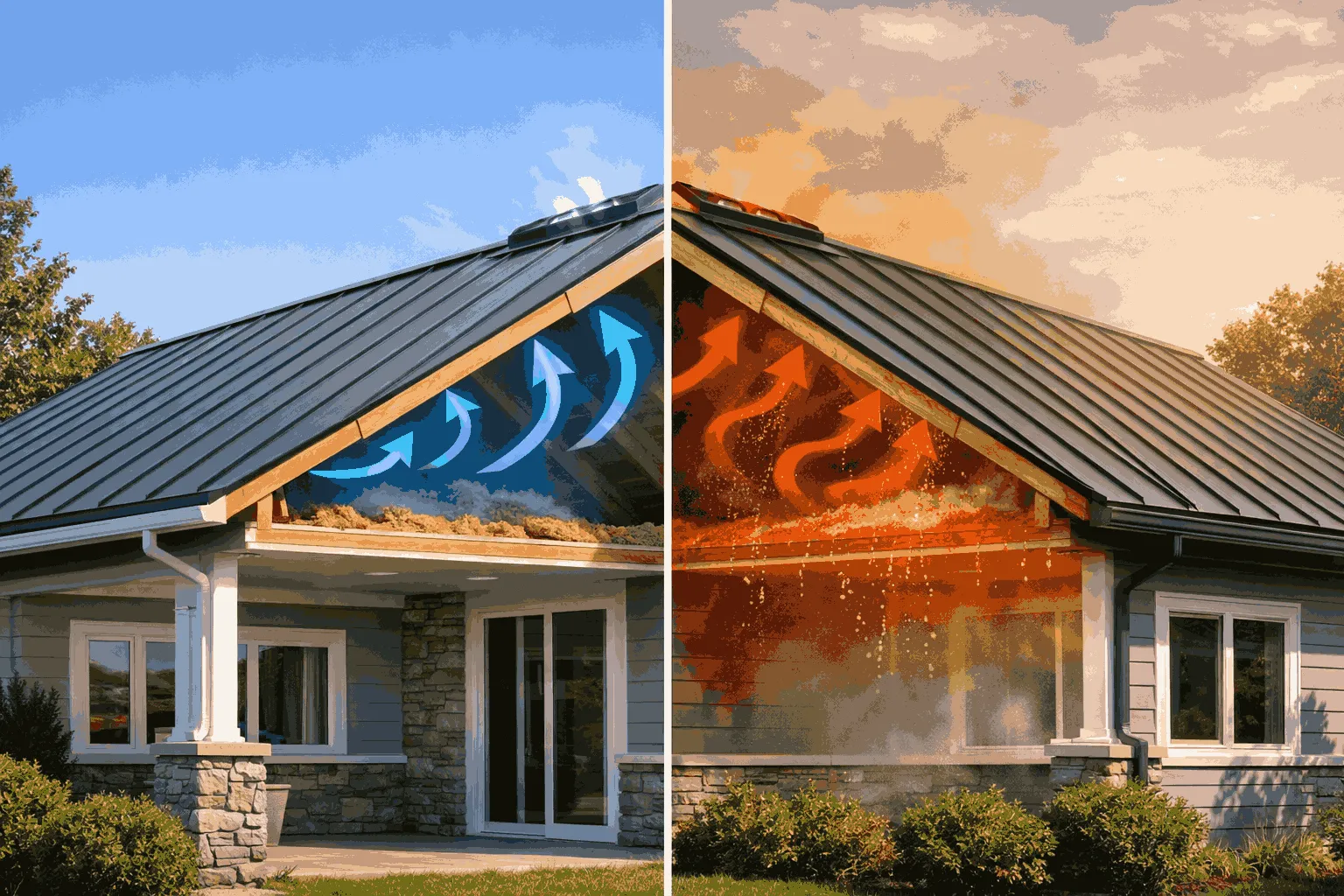
Roof ventilation plays a critical role in controlling heat and moisture inside your attic or roof space. When a roof is properly ventilated, fresh air enters at the lower points of the roof and exits near the top. This continuous movement of air helps regulate temperature and remove moisture before it can cause damage.
With metal roofs, ventilation is especially important because metal reacts quickly to temperature changes. On hot days, metal panels heat up fast. Without airflow beneath them, that heat becomes trapped in the attic, raising indoor temperatures and forcing your air conditioner to work harder.
Ventilation also helps prevent moisture problems. Everyday activities inside your home—such as cooking, showering, and even breathing—release moisture into the air. If that moist air rises into an unventilated attic, it can condense on cooler metal surfaces, leading to water droplets, damp insulation, and long-term damage.
In short, proper ventilation helps:
-
Keep attic temperatures under control
-
Reduce moisture buildup and condensation
-
Improve indoor comfort
-
Lower energy costs
-
Protect roofing materials and structural components
How Ventilation Protects the Lifespan of a Metal Roof
Metal roofs are known for their long lifespan, often lasting 40 to 70 years or more. However, poor ventilation can significantly shorten that lifespan.
In poorly ventilated attics, temperatures can reach 140 to 160°F during summer. This extreme heat doesn’t just affect comfort—it also accelerates wear on roofing components, underlayment, fasteners, and insulation. Over time, constant heat stress can lead to premature aging of materials and higher maintenance costs.
Moisture is another major concern. When condensation forms beneath metal panels, it can drip onto wooden roof decking, causing rot, mold growth, and structural weakening. In steel roofing systems, trapped moisture can also contribute to corrosion if protective coatings are compromised.
Good ventilation helps by continuously flushing out hot, moist air and replacing it with cooler, drier air. This balanced airflow reduces thermal stress and moisture exposure, allowing your metal roof to reach its full expected lifespan.
How Metal Roof Ventilation Actually Works
Roof ventilation relies on a simple but effective principle: hot air rises. A properly designed ventilation system takes advantage of this natural movement of air.
Cool air enters the attic through intake vents, usually located at the eaves or soffits. As the air warms, it rises toward the peak of the roof and exits through exhaust vents, such as ridge vents. This creates a steady flow of air that removes heat and moisture before they can cause problems.
This process is often called the chimney effect, and it works best when intake and exhaust vents are balanced. Too much exhaust without enough intake can reduce airflow, just as too much intake without proper exhaust can trap hot air.
When ventilation is working correctly, it operates quietly and continuously, without the need for electricity or mechanical assistance.
Best Ventilation Options for Metal Roofs
There is no one-size-fits-all ventilation solution, but some systems work especially well with metal roofing.
Ridge Vents
Ridge vents are installed along the highest point of the roof and allow warm air to escape evenly across the entire ridge. They are highly effective, discreet, and compatible with most metal roof designs. Many metal roofing manufacturers offer ridge vent systems specifically designed to match their panels.
Soffit Vents
Soffit vents are installed under the roof’s overhangs and provide the intake air needed for proper airflow. Without soffit vents, exhaust vents cannot function effectively. A balanced system typically uses equal amounts of intake and exhaust ventilation.
Gable Vents
Gable vents are located on the exterior walls at each end of the attic. They can help with airflow but are usually less effective on their own. In many cases, they work best as a supplement rather than the primary ventilation method.
Powered Ventilation
Powered attic fans can help move air in extreme conditions, but they require electricity and ongoing maintenance. In many homes, a properly designed passive ventilation system is more reliable and cost-effective over time.
Common Ventilation Mistakes With Metal Roofs
Even high-quality metal roofs can develop problems if ventilation is done incorrectly. Some of the most common mistakes include:
-
Not providing enough intake ventilation at the soffits
-
Blocking airflow with insulation pushed into vent openings
-
Mixing different ventilation systems that interfere with each other
-
Installing metal roofing over old shingles without addressing airflow
-
Failing to calculate the correct ventilation area for the roof size
Avoiding these mistakes during installation can save homeowners from costly repairs down the road.
Ventilation vs. Insulation: Why You Need Both
Homeowners often wonder whether insulation alone can solve condensation and heat issues. The truth is that insulation and ventilation serve different purposes, and both are necessary.
Insulation slows heat transfer and keeps warm indoor air from reaching cold surfaces. Ventilation removes heat and moisture that still make their way into the attic. Without ventilation, moisture can build up even in well-insulated homes. Without insulation, ventilation alone cannot prevent temperature extremes.
The best roofing systems use both strategies together to create a dry, energy-efficient environment.
Do Metal Buildings Need Special Ventilation?
Metal buildings such as garages, barns, and workshops often require different ventilation solutions than homes. Many lack traditional attic spaces, which makes airflow more challenging.
These structures often rely on:
-
Larger ridge vents
-
Sidewall intake vents instead of soffits
-
Increased ventilation capacity due to open interiors
-
Specialized designs when insulation is added
Because metal buildings experience larger temperature swings, ventilation plays an even bigger role in preventing condensation and moisture damage.
Final Thoughts
Metal roofs absolutely need proper ventilation to perform as intended. While metal roofing offers excellent durability, energy efficiency, and weather resistance, it still depends on good airflow to manage heat and moisture.
A well-ventilated metal roof lasts longer, performs better, and keeps your home more comfortable year-round. If you’re installing a new metal roof or evaluating an existing one, ventilation should never be an afterthought—it’s a key part of protecting your investment.