Key Takeaways
-
A roof shingle square = 100 square feet of roof surface, and this unit helps roofers calculate materials, labor, and costs more accurately.
-
Most shingles require 3 bundles per square, but premium shingles may need 4–5 bundles, so always check the product label before ordering.
-
Your home’s floor area is NOT your roof’s area roof pitch (slope) increases total surface area and must be included when calculating roofing squares.
-
Always include a 10–20% waste factor, depending on roof complexity, to avoid running short on materials due to trimming, cutting, and complex roof features.
-
Common measuring mistakes such as ignoring slope, forgetting waste, or confusing bundle counts can cost hundreds or even thousands of dollars.
What is a Roof Shingle Square?
If you want a home improvement project, installing new roof shingles or small siding, you’ve come across this not-so-familiar term: the “roofing square.” We know it can be frustrating to go from standardized measurements like “square feet” to an industry-driven unit. You really want to know how much material you need.
Understanding roofing measurements is key to preparing for a roofing project. Every business, homeowner, or do-it-yourselfer needs to understand what a roof shingle square is. When you’re making decisions that involve thousands of dollars, you want to be sure you know how to measure a Roofing Square.
We are going to learn everything you need to know about your roof, from what it is and how much it costs to the choices you have and the steps you must take to minimize costly mistakes.
What is a Roof Shingle Square?
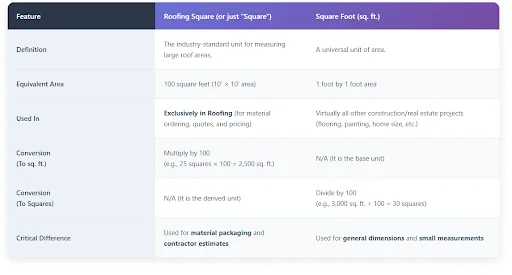
A roof shingle square is the amount of roofing material that covers 100 sq. feet on a roof, or a 10×10-foot section. A roofing square is 100 square feet of roof coverage. All of which allow the homeowner, contractors, and suppliers to easily calculate the quantities needed for each project.
The word “square” originated in the roofing industry decades ago, when the industry needed to develop a standardized procedure for ordering and pricing. The 100-square-foot standard would allow professionals to speak more precisely and with clearer eyes about quantities and costs.
Knowing this fundamental room is essential whether you are hiring a contractor, calculating how much a new home will cost, or simply updating your current house’s floor plan. For a more detailed understanding, the National Roofing Contractors Association (NRCA) provides an overview of industry standards and measurement methodologies.
How Many Bundles of Shingles in a Square?
In psychology, we’re much more comfortable with round numbers. To say “your roof is 25 squares” is cleaner and quicker than saying 2,500 square feet. When you are making calculations over the course of a day, adding items, labor, and such, it adds up.
But for you as a homeowner? All you really need to know is that when someone tells you your roof is, say, “20 squares,” they’re saying it has 2,000 square feet of surface.
Here’s the quick math:
- 100 square feet = 1 roofing square
- 10 squares of roofing = 1,000 square feet
- 25 square (roofing; also written 25sq and may be expressed in units of any size) = 2,500 sq ft
Now you know what a square is. But when you order or pick material from a store, or even merely examine the contractor’s list of material on plans, you’re not buying “squares” at all; you’re buying bundles. So how do these relate?
- 3 bundles = 1 sq.
Some premium or specialty shingles are packaged in other ways:
- 4 bundles per square: Higher-end architectural shingles and some thick, hand-split shakes.
- 5 bundles per square: Some designer or specialty shingle styles
This is why you should always, always read the product packaging or specs before placing an order. That number will always be on the packaging, and the manufacturer should tell you how much they cover per bundle.
Real-world example:
Let’s suppose your roof is 20 squares and you’re covering it with three-tab standard shingles.
- 20 squares × 3 bundles per square = 60 bundles total
But if you’re using a premium shingle that requires four bundles per square:
- 20 squares × 4 bundles per square = 80 bundles total
That’s a difference of 20 bundles. At $30-40 per bundle, that’s $600-800 in materials. See why getting this right matters?
How Much is a Square of Shingles?
The terms and costs of a roof square, however, change by material quality and location:
Price ranges per square (as of 2024-2025):
Three-Tab Shingles (Basic)
- $75 – $150 per square
- These are your budget-friendly options, functional but with less aesthetic appeal and shorter lifespan
Architectural Shingles (Mid-Range)
- $100 – $250 per square
- This is what most homeowners choose—better appearance, more extended warranty, good value
Premium/Designer Shingles (High-End)
- $250 – $600+ per square
- Luxury shingles that mimic slate or wood, with extended warranties and superior aesthetics
Labor, underlayment, flashing, and disposal costs are all to be considered. Most roofing contractors itemize these costs on their estimates, and you pay this amount per square. This helps homeowners budget better.
Mistakes People Make When Calculating Roofing Squares
This kind of mistake can easily cost you hundreds, perhaps even thousands of dollars, and they’re all completely preventable.
Mistake 1: Measuring Square Footage, Not Roof Surface Area
Your roof is not flat. It has slopes (called pitch). The steeper the roof, the greater the surface area your roof has relative to the floor space beneath it.
Your home’s footprint might be 1,500 square feet, but with a moderately pitched roof, the actual area of your roof could easily exceed 1,800 square feet. For a steep roof, it might be 2,000+ square feet.
Mistake 2: Forgetting Waste Factor
Even professional roofers do not order the number of shingles they measure. Why? Roofing, after all, is a business of waste cutting, trimming, and inevitable wastage.
Standard waste factors:
- Basic roof (rectangle with a small number of penetrations): 10% more
- ComplicatedStyle Roof (3+ valleys, dormers, skylights): Additional 15-20%
So if you measure 20 squares, you should actually order:
- Just a simple roof 20 squares + 10% = 22 squares
- Complex roof: 20 squares + 15% = 23 squares
Demanding an exact measure is a recipe for trouble. You will almost certainly fall short, and finding matching shingles later can be tough if your precise color or style is no longer in stock.
Mistake 3: Getting the Bundles Confused
They see “3 bundles per square” online, assume all shingles fall into this category, and order enough for their premium-grade architectural shingles, which actually need four bundles per square. Now they are short 25 percent on materials.”
Mistake 4: Ignoring Complex Features
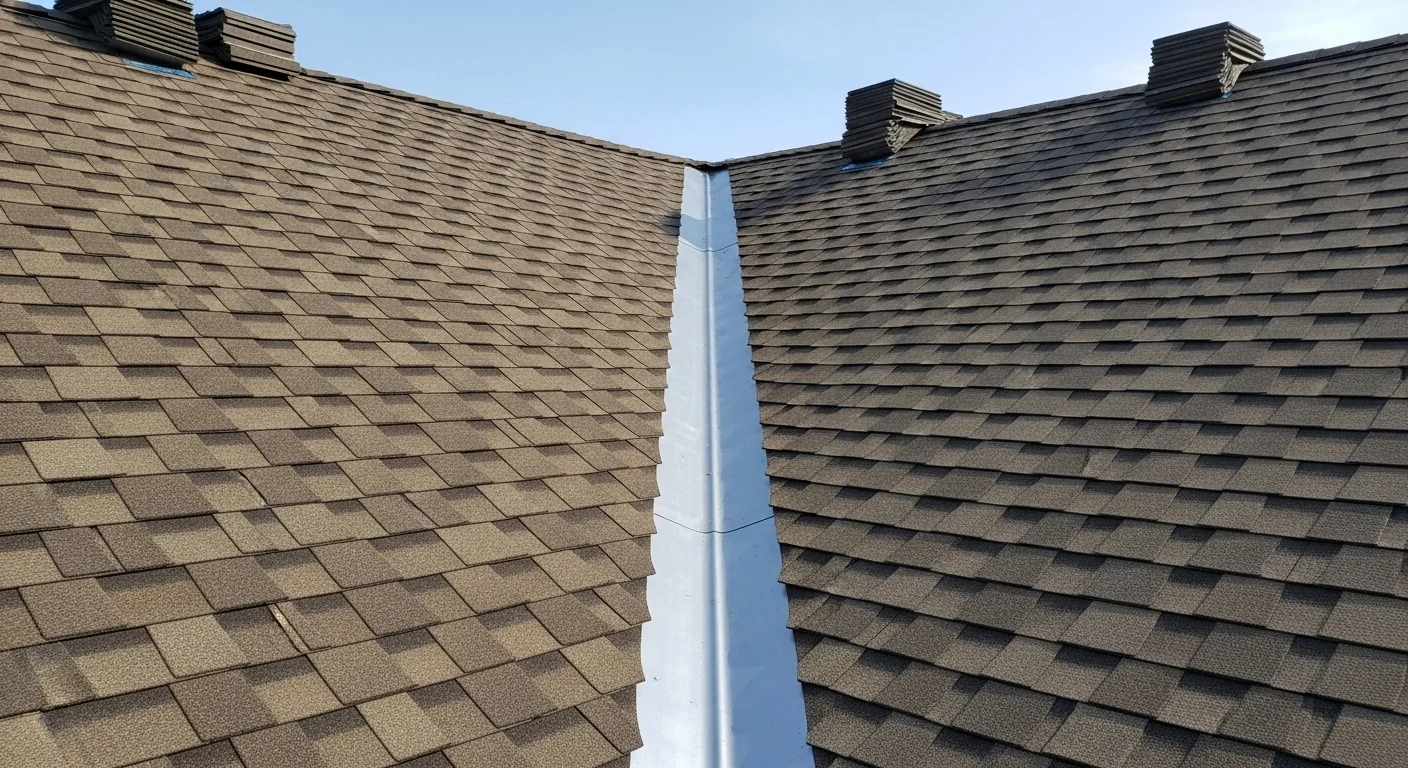
Each chimney, skylight, dormer, valley, and ridge adds more complexity, more materials, and more cutting. These additions add waste and usually require custom flashings and trim.
A heavily articulated roof, with multiple valleys and dormers, might require 20% more material than a simple square-foot section of the same field.
Tools You Will Need to Measure the Squares of a Roof
Basic Tools (For Simple Roofs):
- Measuring Tape
- A 50-foot or 100-foot tape measure
- Used to measure the length and width of roof sections
- Essential for ground-level measurements
- Ladder
- Safe access to the roof level
- IMPORTANT: Only use if you’re comfortable, and it’s safe. Steep or high roofs should be left to professionals.
- Calculator
- For converting measurements to roofing squares
- Your phone calculator works fine
- Notepad/Graph Paper
- Sketch your roof layout
- Record measurements for each section
- Having a visual diagram helps prevent errors
Advanced Tools (For Accurate Professional-Level Measurements):
- Pitch Gauge (Roof Slope Meter)
- Measures the exact pitch/slope of your roof
- Critical for calculating the pitch multiplier
- Available at most hardware stores for $20-30
- Drone with Camera
- Becoming increasingly popular for roof inspections
- Allows safe measurement without climbing
- Can capture detailed photos for accurate calculations
- Roofing Measurement Apps
- Apps like RoofSnap, EagleView, or Hover
- Use satellite imagery and technology to calculate roof measurements
- Professional roofers often use these for quick, accurate estimates
- Laser Distance Measurer
- Provides precise measurements from the ground
- Eliminates the need to climb in some cases
- Useful for measuring height and distances
How to Estimate Shingle Bundles From Roofing Squares
Once you have your final, accurate number of squares, estimating the bundles is straightforward:
Example Calculation
Let’s assume your roof area measures 25 squares (2,500 sq. ft.) and you are using standard architectural shingles (3 bundles per square). We will use a typical 15% waste factor for a moderately complex roof.
- Initial Bundle Count: $25 \text{ Squares} \times 3 \text{ Bundles/Square} = 75 \text{ Bundles}$
- Calculate Waste: $75 \text{ Bundles} \times 0.15 (\text{15\% Waste}) = 11.25 \text{ Bundles}$
- Total Bundles to Order (Always Round Up): $75 + 11.25 = 86.25 \text{ Bundles}$. Order 87 Bundles.
Conclusion
Your roof is among the most crucial and expensive parts of your home. Whether you are getting estimates from a contractor or doing it yourself, knowing these measurements and calculations can save you from costly errors that can add up to thousands of dollars.
Here’s what you need to know:
- A roofing square = 100sq ft. That’s the universal measurement distance in roofing.
- Most shingles = 3 bundles/square . But always check your product.
- Be sure not to mix up square footage and roofing squares. They are related, but quite different measures.
- Add 10-20% for waste. Never order exact amounts.
- Account for the roof pitch. The roof has more surface area than the floor.
If you are unsure, have your feet measured. A bad estimate is a small price to pay for not ordering the wrong thing. Whether you’re engaging a contractor or doing it yourself, you now know enough to understand quotes, check estimates, and order the correct amount of materials. That knowledge is your confidence, what you rely on to protect your investment.
Professional roofers like Mk Best Roofing offer quotes and let you ask questions. Now you’ll know precisely what they are telling you and why, and that makes you a much savvier customer.