For Long Island homeowners, the roof is the first and most vital defense against everything from scorching summer humidity to freezing winter. When you purchase a new shingle roof, you’re not just buying materials; you’re buying years of stress-free living.
How long does a typical Long Island roof last? The answer is complex and highly dependent on a few key factors: the material you choose, the quality of installation, and perhaps most importantly, the specific environmental stresses unique to Nassau and Suffolk counties. We know that replacing a roof is one of the most significant and stressful investments you’ll ever make.
This guide is intended to help you see through marketing claims, understand what you can realistically expect in terms of longevity given Long Island’s weather conditions, and identify which shingles offer the best long-term value for your home.
1. The Core Factors Impacting Shingle Roof Lifespan
All manufacturers offer a general warranty that outlines the expected life of your roof. Still, the actual life of any roofing system depends on a range of factors that may accelerate or slow material decay.
Material Quality and Type
Shingle types are typically grouped by material and construction:
- 3-Tab Asphalt Shingles
These are thinner and the basic types of shingles with alternating slots for a uniform appearance. They are the cheapest but have the lowest durability, with lower wind resistance and less structural support.
- Architectural (Laminated) Shingles:
These shingle products are thicker than standard-grade and have a multi-dimensional look. They are heavier, offer better wind resistance, and, because of their greater weight, delay granule loss and provide a longer service life than paper-based shingles.
- Specialty Shingles (Wood, Metal, Composite)
Available in premium options other than asphalt, such as wood, metal, and composite, which don’t look like all materials but may be practical, offering a better lifespan than asphalt.
Role of color and reflectance
It might sound cosmetic, but the color of your shingles matters a great deal, especially during Long Island’s steamy summers.
- Red and black shingles generate excessive heat on the roof deck and in the attic due to their high solar absorption. This never-ending hot weather will dry out the asphalt ingredients, causing them to soften and expand/contract faster. This cycle of heat buildup creates a “cycling effect” on the asphalt, which, as a result, prematurely degrades by cracking under UV exposure.
- Reflective shingles: Highly reflective shingles that meet both the EPA’s ENERGY and reflectivity guidelines reduce your air conditioning needs. This not only helps prevent the shingle from expending its service life due to thermal stress, but also keeps your cooling costs down during the summer.
Installation and Ventilation Quality
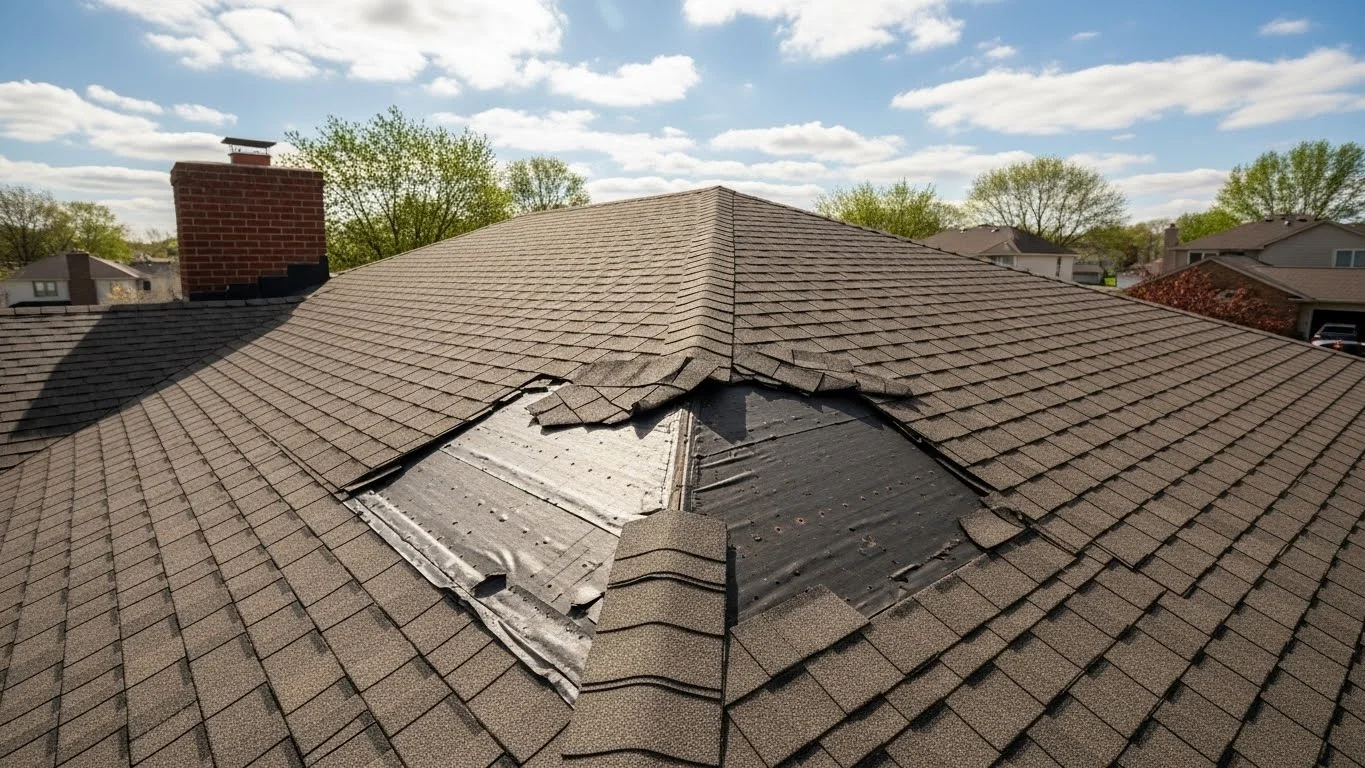
The most durable shingle will fail prematurely if the installation is not done correctly or if the shingles are improperly installed (incorrect nailing pattern, inadequate underlayment).
Equally important is attic ventilation. Inadequate ventilation in the attic traps heat sucked in by the shingles and overheats the underside of the roof deck. You need to get this hot air out via adequate intake (soffit) and exhaust (ridge) ventilation.
If the bottom side of the shingle is exposed to too much heat, it overbakes the asphalt, drastically shortening its life.
Long Island Climate:
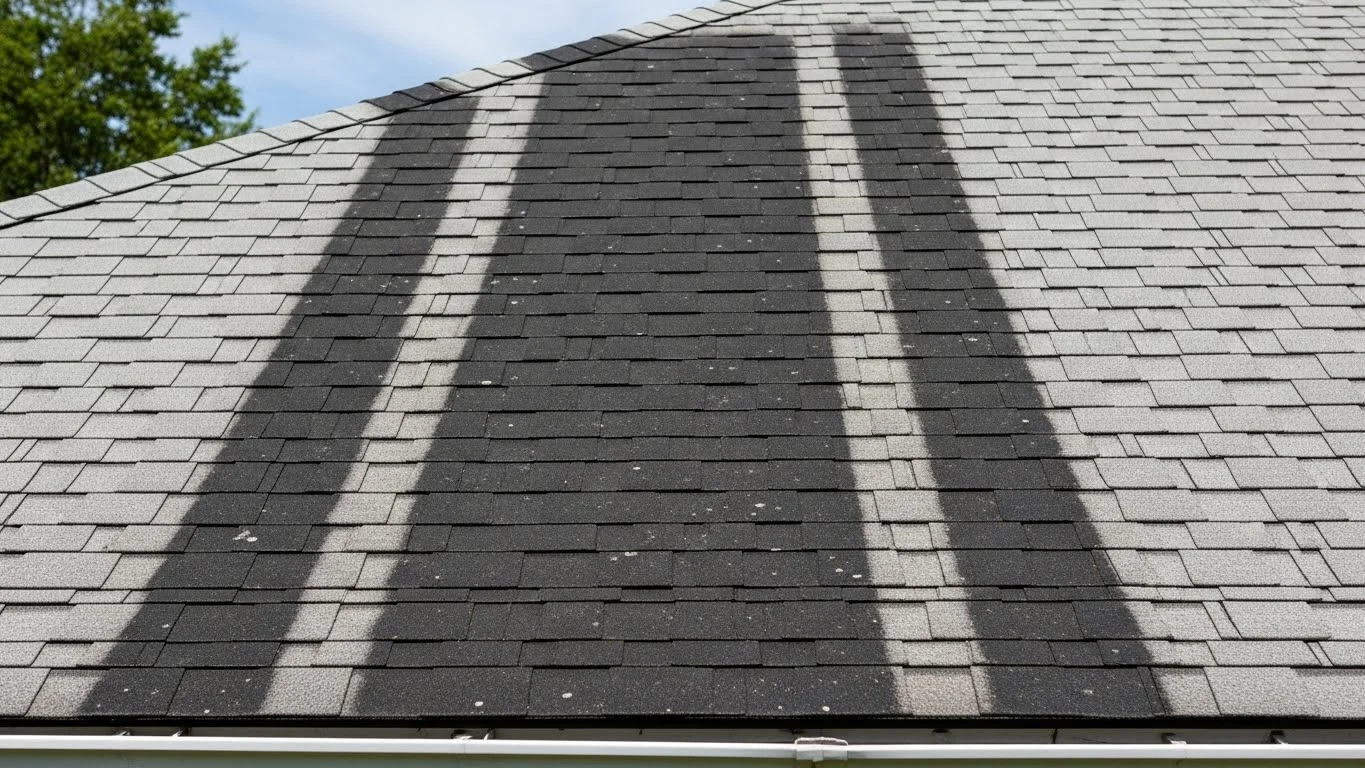
- Humidity and Algae: Given Long Island’s high humidity, particularly along the coast where most of us live, it’s a wonder how we ever keep anything algae-free.But it should come as no surprise that Gloeocapsa magma, an airborne blue-green algae, finds our atmosphere quite comfortable and is very happy to stay. This algae eats the limestone fillers in asphalt shingles, holding water against the roof and accelerating wear on the grains.
- Salt in the Air Corrosion: Homes located near the Great South Bay, the Atlantic Ocean, and Long Island may experience salt in the air, which can accelerate corrosion of fasteners, metal flashing, and gutter systems.
2. General Shingle Roof Longevity:
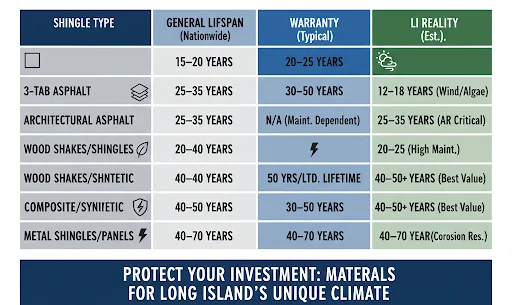
To set a baseline, here are the typical life expectancies for various roofing materials under ideal, moderate conditions. Keep in mind that Long Island weather will push these estimates toward the lower end.
3. Shingle Lifespan on Long Island:
Once you take into account the unique Long Island environment, you have to realign all your expectations. Here’s how region affects each of the major shingle types.
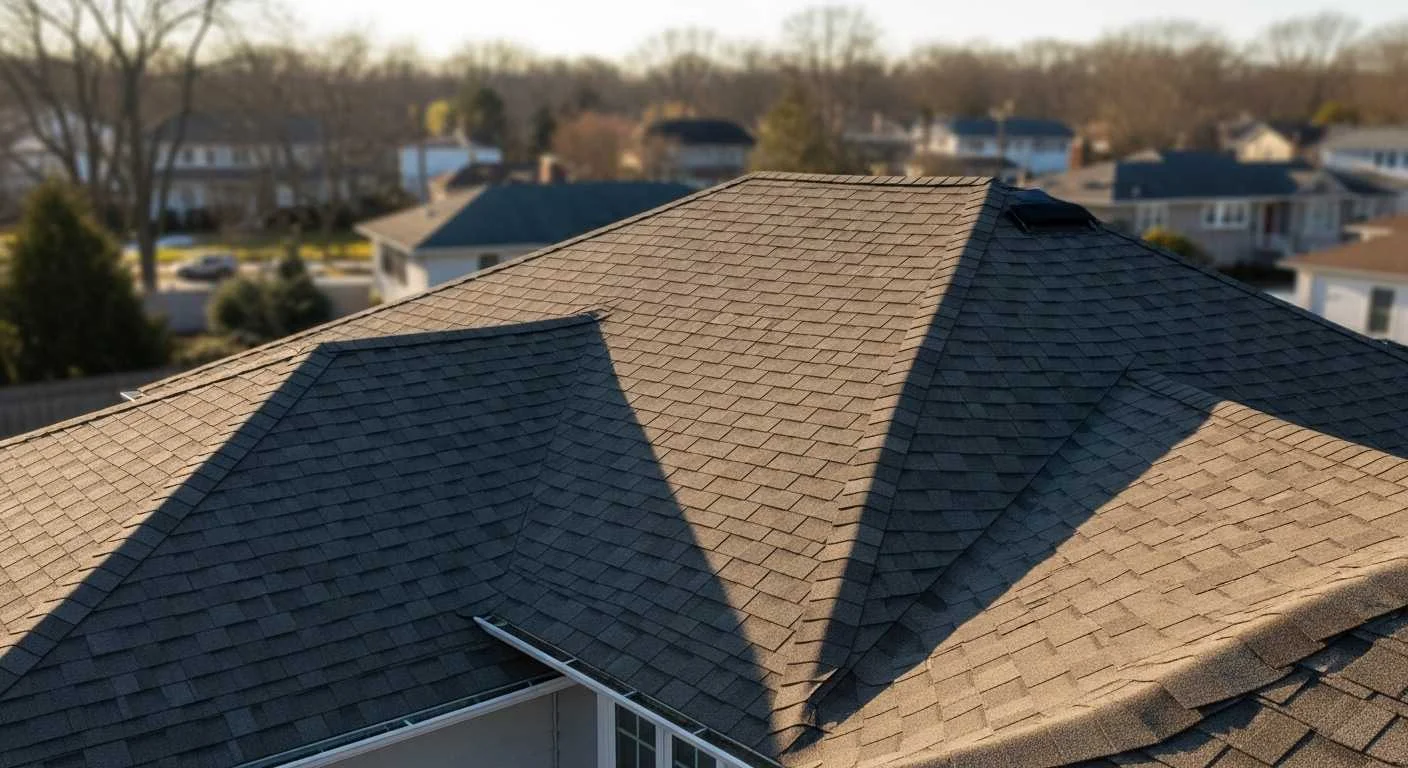
Asphalt Shingles (3-Tab and Architectural)
The most commonly used option on Long Island is asphalt shingles, which are highly adaptable to local environmental conditions.
- 3-Tab Asphalt Ideal: With minimal wind resistance and a 20-year warranty, metal is one of the cheapest roofing types. Expect 12 to 18 years.
- Architectural Asphalt Real Life: They are cumbersome and, because of their double-layer feature, they fare well in high winds. But let’s face it, the algae issue is not going away. When choosing architectural shingles in Long Island, homeowners must consider using algae-resistant (AR) shingles with copper granules. These granules release copper ions over time when they are rained on, preventing algae growth and protecting the asphalt. With ventilation and AR features, it will last 25 to 35 years in the Long Island climate.
Wood Shingles and Shakes
The wood, usually cedar, has a pretty rustic vibe that’s right at home in many charming historic Long Island towns.
Wood Shingle Reality:
- Wood is a natural, porous material susceptible to moisture and salt.
- The freeze-thaw cycles and high humidity accelerate moisture absorption, leading to cracking, splitting, curling, and the growth of destructive moss and lichen.
- Without maintenance, a wood roof on Long Island is likely to have its lifespan reduced to 20 to 25 years, significantly less than its potential 40-year life inland.
Metal Shingles and Panels
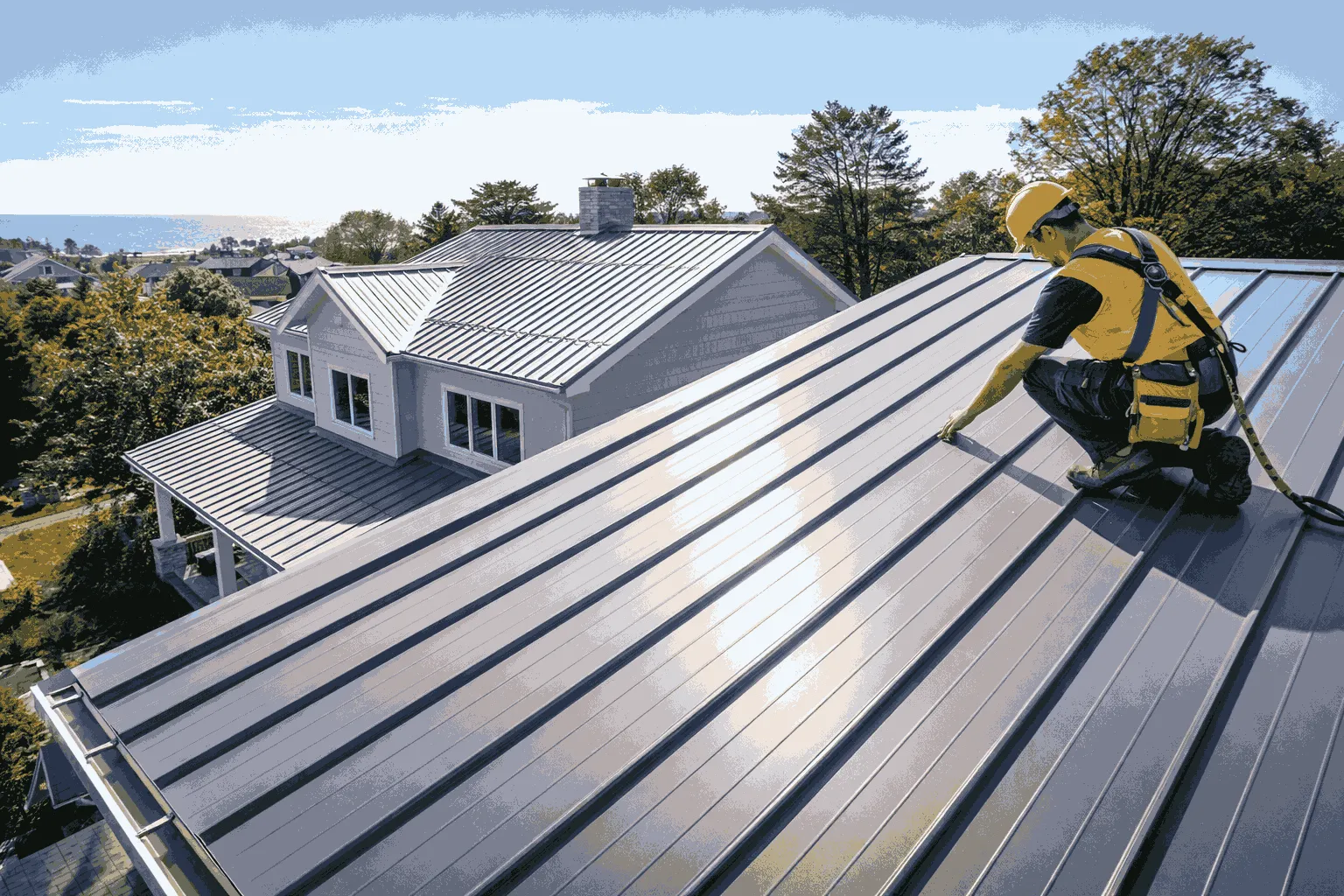
Metal Roofing is gaining popularity very quickly on Long Island for its durability under local weather conditions.
Metal Shingle Reality:
- Metal is resistant to wind pressure, water, and freeze-thaw cycles, so it’s the most durable choice for Long Island winters with high winds.
- It is also 100 per cent resistant to algae, mold, and moss. The most common life concern is the finish’s integrity and resistance to salt-air corrosion.
- High-quality metal roofs do not leak and are designed to prevent rust.
- With proper installation and top-quality coating, homeowners in Long Island can realistically expect their metal roof to last 40 to 70 years, modestly, if not more, over the lifespan of their home.
Composite and Synthetic Shingles
These shingles, made of polymer, are engineered to resemble upscale materials such as slate or shake but with greater strength.
Synthetic Shingles Reality
- Heavy composite roofing can’t work on Long Island when it comes to looks and protection.
- Composites really are the “best of both worlds” as far as how this type of roof withstands our little piece of earth.
- They are limestone-free (so they can’t absorb Gloeocapsa magma, the bacteria that cause black streaks on most roofs).
- They are also impervious to salt air, humidity, and freeze-thaw cycles, and typically have the highest Class 4 impact resistance in their class.
- Composite roofing is built to last in coastal or high-weathered environments, offering a dependable lifespan of 40- 50+ years. Upfront costs are higher than for architectural asphalt, but maintenance is minimal, and longevity far surpasses competitors’.
Comparing Shingle Roofs with Alternative Roofing Materials
Long Island homes utilize a variety of roofing materials. Here’s how shingle roofs compare to the most common alternatives, which you might consider for a complete solution.
Slate and Clay Tile
- Longevity: This is the undisputed champion, lasting 75 to 150 years. Slate and tile are completely inert and unaffected by Long Island’s algae, salt, or temperature extremes.
- Trade-Off: The extremely high upfront cost and the complexity of the installation make them prohibitive for most homeowners. They also require special structural reinforcement due to their immense weight, a factor thoroughly detailed in articles on structural requirements for heavy roofing materials.
Flat Roofing (TPO/PVC)
- Longevity: TPO (Thermoplastic Polyolefin) and PVC (Polyvinyl Chloride) are standard on flat or low-sloped areas (such as dormers, porches, or commercial structures) often attached to a shingled main roof. These synthetic membranes offer excellent seam strength and heat reflectivity. A high-quality installation can last 20 to 30 years.
- Trade-Off: While durable, they lack the aesthetic appeal of shingles and are limited to low-pitch applications. However, they are a necessary component for many modern or multi-tiered Long Island homes.
The Value Proposition for Long Island Homeowners
For the majority of Long Island homes, the best balance of cost, aesthetics, and longevity is found in architectural asphalt, composite, or metal shingles.
- Standard asphalt is too vulnerable to wind and algae to be considered a long-term investment in this region.
- Metal and composite offer the best protection against Long Island’s specific threats (wind, salt, algae) and the lowest total cost of ownership over 50 years, despite a higher upfront price tag.
Conclusion
The question of “How long does a shingle roof last?” in Long Island doesn’t have a single answer; it has an answer dictated by your choices and diligence.:
- Prioritize Algae Resistance: When choosing asphalt, select only algae-resistant (AR) products to combat the persistent Gloeocapsa Magma that shortens roof life in this humid climate.
- Invest in Installation: An improperly nailed shingle will fail during the next Nor’easter, regardless of its warranty. Hire a certified, local contractor familiar with Long Island’s stringent building codes and wind-mitigation techniques.
- Ventilation is Durability: Ensure your attic has a balanced ventilation system. Reducing trapped heat is the single most effective way to slow the aging of your shingles.
- Consider the Long View: If your budget allows, upgrading to metal or composite shingles offers superior resistance to Long Island’s specific hazards (wind, salt, freeze-thaw) and provides a multi-generational lifespan, translating to the lowest cost per year of service.
A shingle roof is a complex system designed to protect everything you own. By understanding the unique environmental threats of Long Island and choosing materials engineered to withstand them, you can confidently invest in a roof that will deliver decades of reliable service.