Cedar shakes and shingles turn up on a lot of premium Northeast roofs, and they carry a reputation for keeping a house more comfortable than conventional materials do. That reputation is partly earned and partly folklore. For homeowners in Nassau County, where January nights are genuinely cold and August afternoons are genuinely oppressive, the distinction matters. Below is how cedar actually behaves thermally, what the grading and fire labels on the bundle mean, and where the material earns its cost or quietly works against you.
How Does Cedar Roofing Actually Insulate a Home?
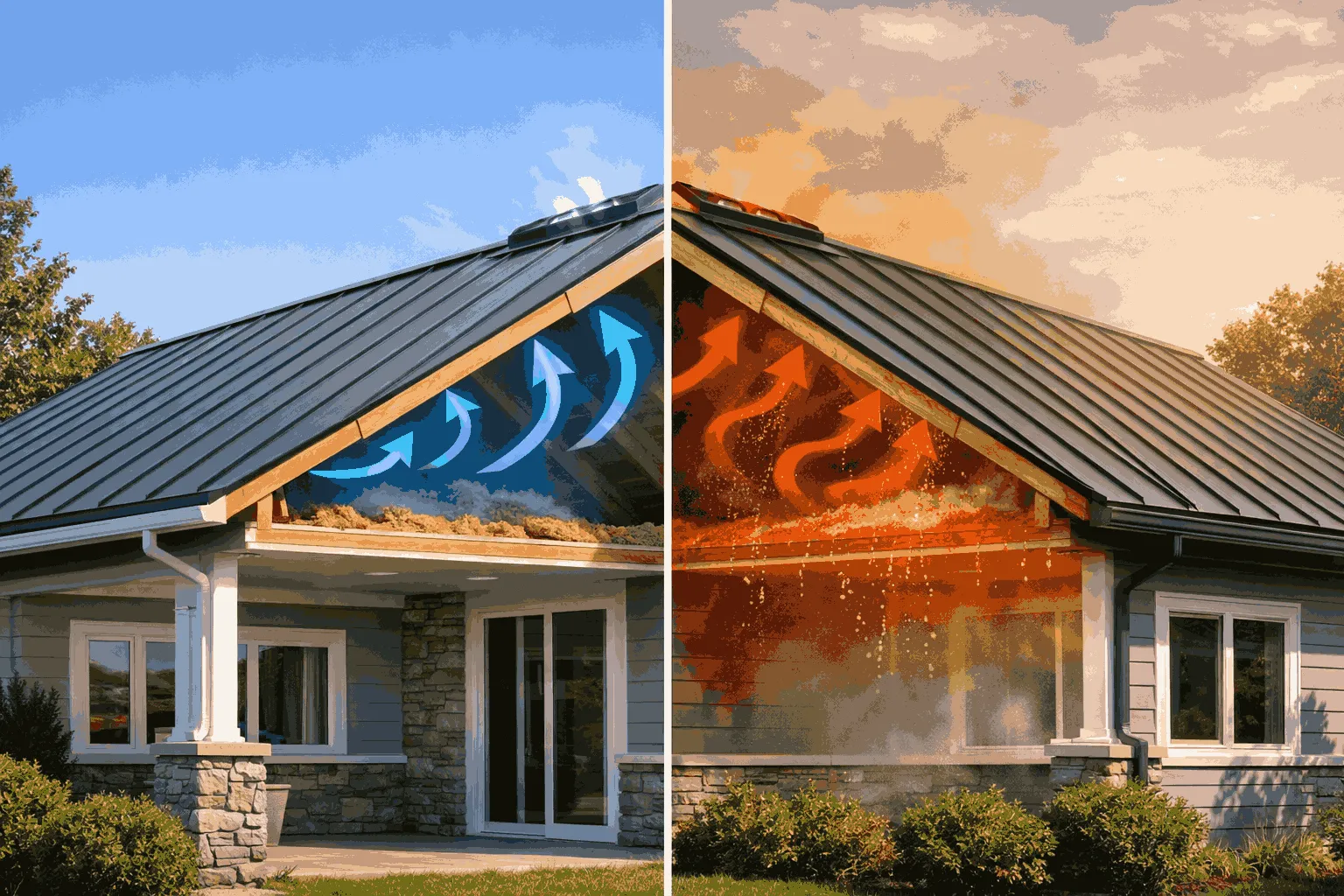
Wood is a cellular material. Cedar’s fiber structure is full of small air pockets, and air conducts heat poorly, so a cedar shake slows the movement of heat between the outside surface and the roof deck.
The numbers give useful perspective. Standard building material reference tables put wood shingles at roughly R-0.94 to R-0.97 and asphalt shingles at about R-0.44. So cedar does have a little over twice the thermal resistance of asphalt as a covering layer, which is where the “cedar insulates better” reputation comes from.
Here is the part most articles leave out. Both of those numbers are small. A properly insulated attic in this climate zone runs somewhere between R-38 and R-60. Against that, the difference between R-0.97 and R-0.44 is a rounding error. Your attic insulation, air sealing, and ventilation determine your energy bill. The roof covering nudges it. Anyone telling you a cedar roof will transform your heating costs is selling something.
One installation detail deserves correcting, because it gets repeated constantly. Shake roofs are built with strips of felt interlaid between courses, and the IRC specifies 18-inch strips of No. 30 felt positioned so the lower edge sits above the butt of the shake it covers by twice the weather exposure. That interlayment is a water baffle. It exists to shed wind-driven rain that gets past the shake face. It is not an insulating layer, and no manufacturer or code source credits it with thermal resistance.
The two product forms
- Shakes are split rather than sawn, giving a rough, irregular face. Butt thickness typically runs from 1/2 inch to 3/4 inch and up. Because they are thicker, they offer slightly more thermal resistance than shingles.
- Shingles are sawn on both faces, thinner, and more uniform. They lay tighter and give a more tailored appearance.
Cedar’s resistance to decay and insects comes from extractives in the heartwood, not from surface oils. Two things follow from that, and both are practical. First, only heartwood is durable, which is exactly why grade matters so much on a roof. Second, those extractives deplete over the service life of the roof, so decay resistance is highest when the roof is new and declines from there. Maintenance is not optional insurance on a cedar roof. It is how you get the service life you paid for.
What Do Cedar Grading and Fire Labels Actually Mean?
The Cedar Shake & Shingle Bureau grades and labels cedar roofing under its Certi-label program. Shingles fall under Certigrade. Shakes fall under Certi-Split for handsplit and resawn products and Certi-Sawn for tapersawn.
Top grades. For shingles, the highest grade is Number 1 Grade, commonly called No. 1 Blue Label: 100% heartwood, 100% clear, 100% edge grain. For shakes, the highest grade is Premium: clear heartwood, 100% edge grain, no defects. Number 1 Grade shakes allow up to 20% flat grain per bundle. Lower grades permit sapwood and flat grain and are intended for sidewalls, undercoursing, and secondary structures rather than roofs.
Worth knowing when you talk to a supplier: the CSSB itself warns that asking for “the blue label” is not specific enough, because only CSSB member products carry the “Certi” brand name on the label. Ask for the Certi-label by name and ask to keep the bundle labels.
Slope, which the grade does not determine. These are separate questions that get conflated constantly. The CSSB recommends its Certigrade shingles for roofs of 3:12 and steeper, and its Certi-Split shakes for roofs of 4:12 and steeper. Shakes want the extra pitch because their thicker, irregular butts shed water less efficiently than a sawn shingle. Adopted building code minimums are set separately and differ by IRC edition and by jurisdiction, and they do not always match the manufacturer recommendation. Confirm the minimum that applies to your address with your local building department before anyone orders material.
Fire. This is the label to ask about directly. Untreated cedar is unrated. Roof coverings are classified Class A, B, C, or unrated, and untreated wood shakes and shingles fall into that last category, meaning they carry no fire classification at all. Ratings are achieved through pressure impregnation with fire-retardant chemicals, identified by the Certi-Guard label: red for Class B, blue for Class C. Those labels must name the treatment company, the independent testing laboratory, and the building code research number.
Class A is an assembly rating, not a product rating. It is achieved by installing Class B treated product using a specified assembly method, so the underlayment and installation details are part of what earns the rating. One more detail that gets missed on job sites: the CSSB requires Type 316 stainless steel fasteners with Certi-Guard treated material. The wrong fastener on treated cedar is a corrosion problem waiting to happen.
Insurance is worth a separate phone call. Carriers vary considerably in how they treat wood roofing, and some are more restrictive than others regardless of treatment. Ask your carrier directly what fire-retardant treatment does to your premium and your eligibility before you commit to the material.
Where Does Cedar Roofing Help?
1. Slightly steadier indoor temperatures. Heat moves through cedar more slowly than through asphalt, which takes a small edge off temperature swings at the roof deck. Real, but modest. Attic insulation does the heavy lifting.
2. A minor reduction in HVAC load. A covering that resists heat transfer contributes something to the overall assembly. Treat it as a small addition to a well-insulated roof rather than a reason to expect a different heating bill.
3. A roof designed to dry. Cedar is installed with spacing between units, often over spaced sheathing, so the wood can shed moisture and dry between wettings. That is the opposite of sealing it. When a cedar roof fails early, restricted drying and poor ventilation are usually somewhere in the story.
4. Natural decay and insect resistance while the extractives last. Cedar heartwood resists rot and insect attack better than most untreated softwoods. UV exposure will still weather the surface to gray, which is normal aging rather than a defect.
5. A renewable material. Cedar is a renewable resource and untreated cedar biodegrades at the end of its life. One caveat to keep honest: fire-retardant and preservative-treated cedar carries disposal restrictions, so ask the treatment company about disposal before tear-off day.
Where Does Cedar Roofing Struggle?
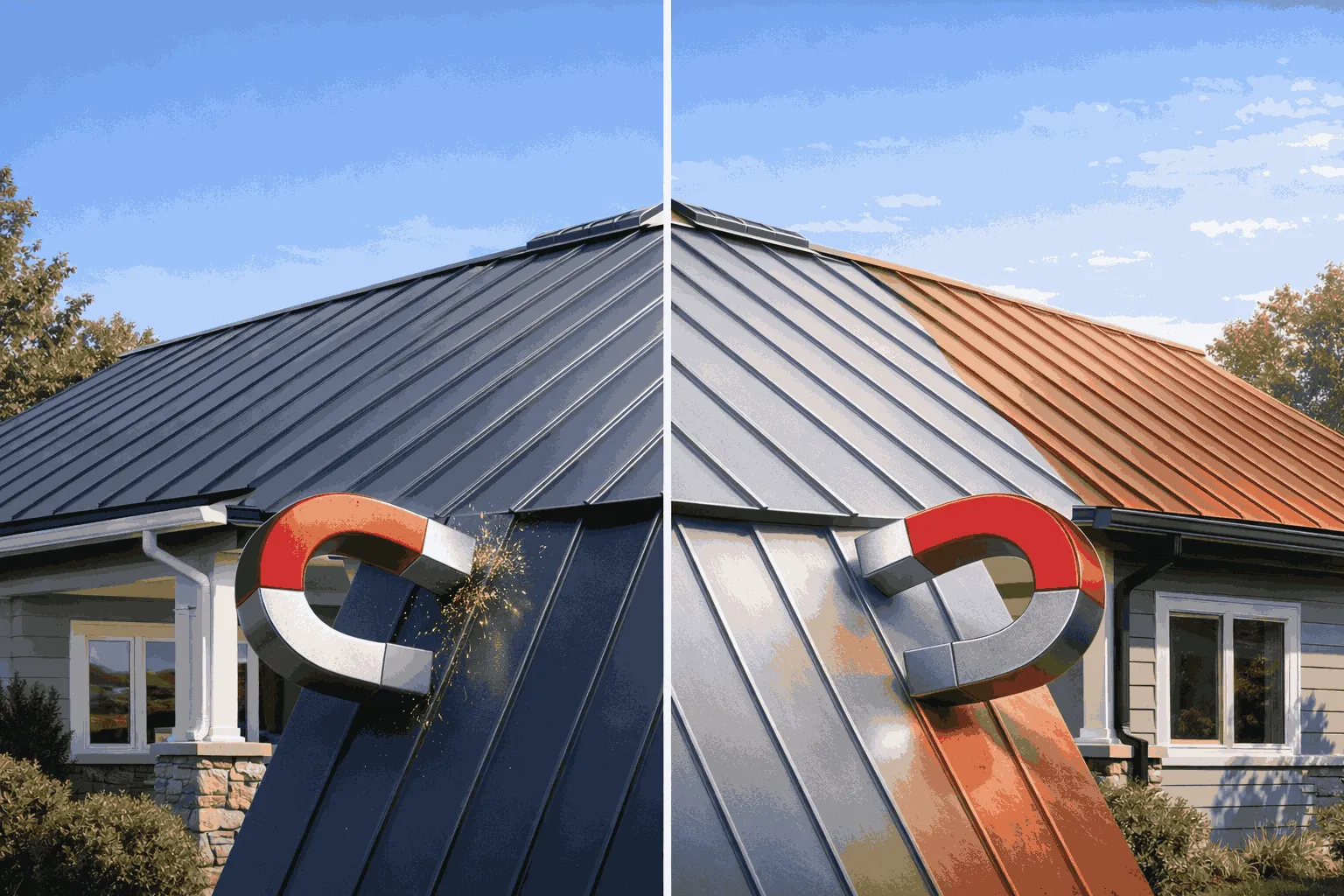
1. Summer heat. Cedar is not a cool roof. Natural cedar generally is not rated by the Cool Roof Rating Council, so there is no published reflectance figure to point at, but it is not a reflective surface and attic temperatures on peak August afternoons will run higher than homeowners expect. One correction to the common comparison: metal is not inherently reflective. A metal roof’s solar reflectance depends on its coating and color, and a dark uncoated panel absorbs heat readily. If reflectance is your priority, compare CRRC-rated products by their published values rather than by material type.
2. Maintenance is part of the deal. Moss, lichen, and trapped debris are common on cedar, particularly on shaded north-facing slopes and under overhanging trees. Debris holds moisture against the wood, and moisture against wood is how decay starts. Annual inspection and cleaning are a condition of owning this roof, not a recommendation.
3. Cost, upfront and over time. Material runs high, competent installation runs higher, and cedar needs periodic attention that asphalt does not. Any summer cooling penalty offsets part of the winter benefit. Whether the math works depends on your house, your slope orientation, and whether the maintenance actually gets done.
4. Cracking, cupping, and splitting. Repeated wetting, drying, and thermal cycling will eventually distort shakes that are poorly ventilated or left dirty. Once units cup or split, both the weather barrier and the thermal contribution degrade.
Do You Need a Permit for a Cedar Roof on Long Island?
Generally yes for a full replacement. Across Nassau County’s towns and villages, full roof replacements and tear-offs typically require a building permit, while minor repairs such as swapping a handful of damaged shakes usually do not. Requirements, fees, and turnaround differ between the Town of Hempstead, North Hempstead, Oyster Bay, and the incorporated villages, and villages often have their own rules layered on top.
Wood shake and shingle installation is also governed by code provisions covering deck requirements, weather exposure, fastening, and felt interlayment. Because both the permit rules and the applicable code minimums vary by jurisdiction, confirm directly with your building department before work starts, and make sure your contractor is installing CSSB Certi-label material with the bundle labels retained for inspection.
Is Cedar Roofing a Good Fit for Nassau County Homes?
Long Island’s climate splits the difference. Cold winters suit cedar. Humid summers do not. If you want the look, you accept the maintenance schedule, and you plan for fire-retardant treated product with the insurance conversation already handled, cedar can be a sound long-term choice on the right house.
If low maintenance is the priority, put architectural asphalt and metal side by side against cedar with a local contractor and compare them on installed cost, expected service life, and maintenance obligation rather than on material reputation.
Frequently Asked Questions
Does cedar roofing improve insulation?
Modestly. Cedar’s cellular structure gives it roughly twice the thermal resistance of asphalt shingles at the covering layer, but both figures are small compared to attic insulation. Cedar contributes to a well-insulated roof. It does not substitute for one.
Is cedar better than asphalt or metal for heat retention?
At the covering layer, cedar has the higher thermal resistance of the three. In summer the comparison flips toward reflectance, where cedar is at a disadvantage against products with reflective coatings. Note that reflectance depends on the specific product’s coating and color, not on whether it is metal or asphalt.
What does the Certigrade label mean on cedar shingles?
Certigrade is the Cedar Shake & Shingle Bureau’s grading system for shingles. Shakes are graded separately under Certi-Split and Certi-Sawn. The top Certigrade grade is Number 1 Grade, known as No. 1 Blue Label: 100% heartwood, 100% clear, 100% edge grain. The CSSB recommends it for roofs of 3:12 pitch and steeper. Lower grades permit sapwood and flat grain and belong on sidewalls and secondary structures.
What slope does a cedar roof need?
The CSSB recommends 4:12 and steeper for shakes and 3:12 and steeper for shingles. Adopted code minimums are set separately and vary by IRC edition and jurisdiction, so confirm the requirement for your address with your building department.
Does a cedar shake roof affect homeowners insurance?
It can. Carriers differ in how they underwrite wood roofing, and some restrict coverage or price it higher, particularly for untreated product. Ask your carrier directly, and ask your roofer which Certi-Guard class the product carries.
Can a cedar roof handle Northeast winters?
Yes, when it is installed to spec and maintained. Correct exposure, correct fasteners, proper interlayment, and ventilation that lets the roof dry are what carry it through freeze-thaw cycling. Inspect annually to catch damaged units early.
Will a cedar roof lower my energy bills?
Do not count on a measurable change. The covering layer is a small share of a roof assembly’s total thermal performance. Attic insulation, air sealing, and ventilation are where the savings are.
How often does a cedar roof need maintenance?
Inspect and clean annually, and more often on shaded slopes or under trees. Re-treatment intervals depend on the product, the treatment used, and exposure, so follow the treatment company’s guidance rather than a generic schedule.