Choosing the right roofing material is one of the most important decisions a property owner can make. Your roof protects your home or commercial building from harsh weather, improves energy efficiency, and plays a major role in the overall value and appearance of your property. Among the many roofing materials available today, aluminum roofing has become one of the most reliable, durable, and energy-efficient options on the market.
Whether you are planning a roof replacement or installing a roof on a newly constructed property, aluminum roofing offers a unique combination of strength, lightweight construction, corrosion resistance, and sustainability. Because of these advantages, aluminum roofing systems have become increasingly popular in coastal regions such as Long Island, where buildings are frequently exposed to salt air, moisture, and strong weather conditions.
The growing demand for this material is reflected in the global roofing market. The aluminum metal roofing market was valued at approximately USD 7.12 billion in 2024 and is projected to reach USD 11.01 billion by 2032, growing at a compound annual growth rate (CAGR) of about 5.60% between 2026 and 2032. This steady growth highlights how property owners, builders, and architects are increasingly recognizing the long-term value of aluminum roofing.
At MK Best Roofing, we specialize in providing high-quality aluminum roofing solutions for residential and commercial properties throughout Long Island. Our team focuses on proper installation, premium materials, and long-term durability so property owners can enjoy the benefits of a metal roof that performs reliably for decades.
In this comprehensive guide, we will explore everything you need to know about aluminum roofing, including:
-
-
What aluminum roofing is and how it works
-
The different types of aluminum roofing systems
-
Key advantages of aluminum roofs
-
The aluminum roofing installation process
-
Cost considerations and long-term value
-
Maintenance tips to extend roof lifespan
-
Why aluminum roofing is an excellent choice for coastal areas
-
By the end of this guide, you will have a clear understanding of whether aluminum roofing is the right option for your property.
What Is Aluminum Roofing?
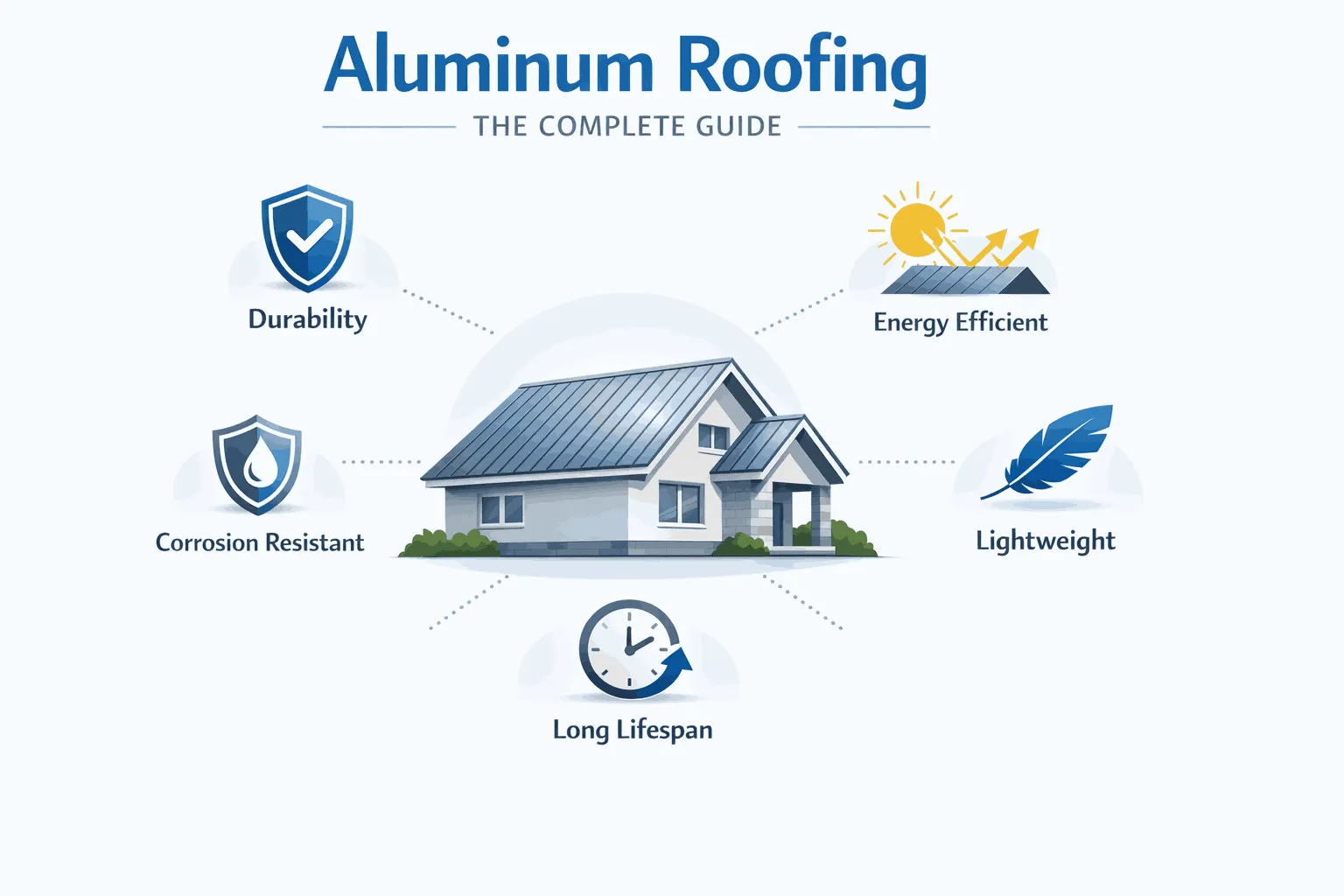
Aluminum roofing is a type of metal roofing system made from high-quality aluminum sheets or panels designed specifically for roofing applications. These panels are engineered to provide durability, weather resistance, and structural protection while remaining lightweight and easy to install.
Most aluminum roofing panels are treated with protective coatings, such as:
-
-
PVDF (Polyvinylidene Fluoride) coatings
-
Polyester paint finishes
-
Reflective cool-roof coatings
-
These coatings improve the roof’s resistance to corrosion, UV damage, fading, and harsh weather conditions.
One of the biggest advantages of aluminum is its natural ability to resist corrosion. When aluminum is exposed to oxygen in the air, it forms a thin protective oxide layer on its surface. This layer acts as a barrier that prevents rust and deterioration, which is a major advantage over materials such as steel that can rust over time.
Because of this property, aluminum roofing performs exceptionally well in coastal environments, where salt in the air can quickly cause corrosion in other metal roofing materials.
For regions like Long Island, where buildings are often exposed to saltwater moisture, heavy storms, and fluctuating temperatures, aluminum roofing offers long-term protection and reliability.
Types of Aluminum Roofing Systems
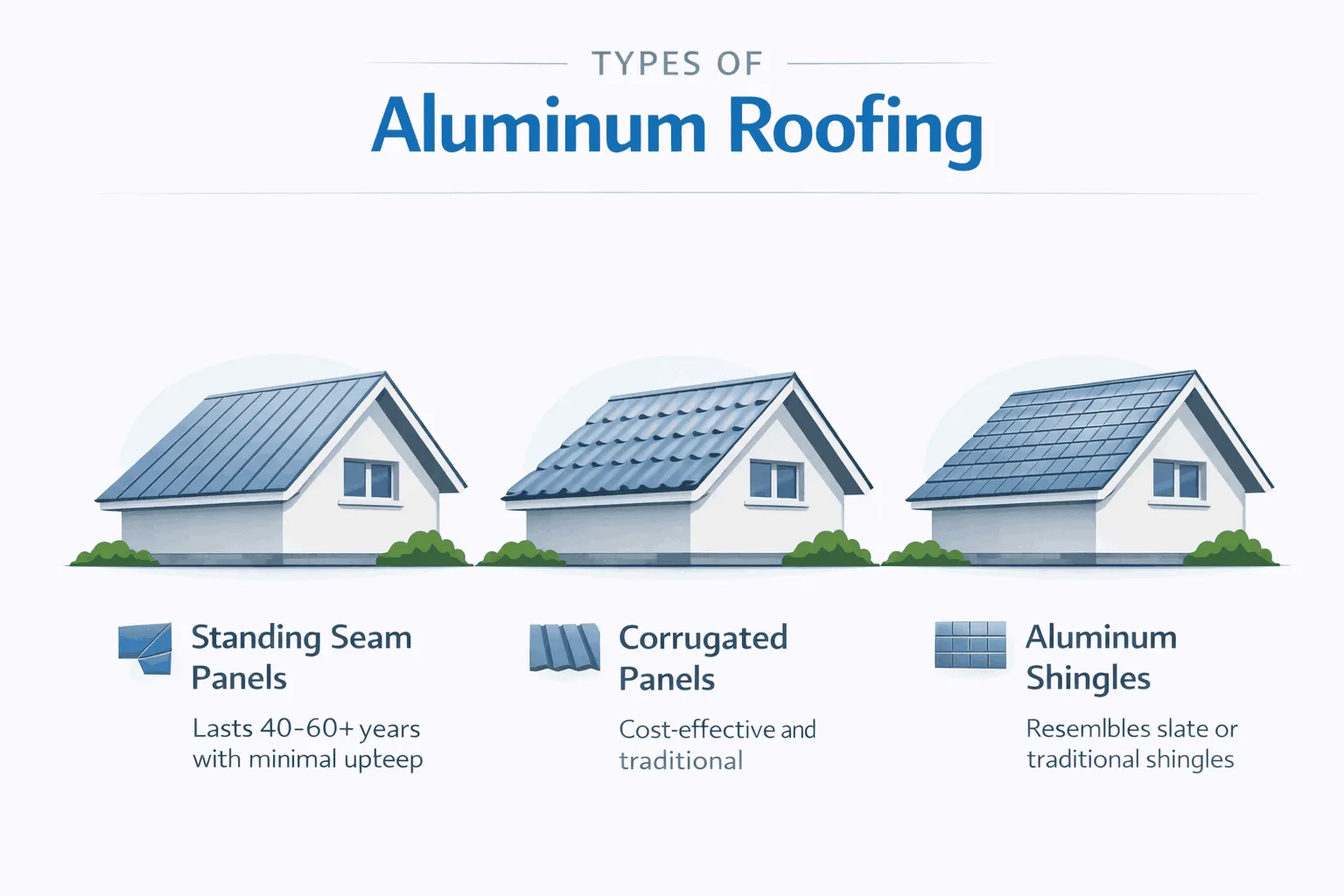
Aluminum roofing is available in several styles and panel designs, allowing property owners to choose an option that complements their building’s architectural style.
Standing Seam Aluminum Roofing
Standing seam metal roofing is one of the most popular aluminum roofing systems used today. It features vertical metal panels that run from the ridge of the roof to the eaves.
The seams between panels are raised above the panel surface and mechanically locked or snapped together. This design provides several benefits:
-
-
Exceptional water resistance
-
A sleek, modern appearance
-
Minimal exposed fasteners
-
Strong wind resistance
-
Standing seam aluminum roofs are commonly used for both modern residential homes and commercial buildings because of their clean look and high durability.
Corrugated Aluminum Panels
Corrugated aluminum roofing panels feature a wave-like or ribbed design that adds strength and structural stability to the metal sheet.
These panels are widely used in:
-
-
Agricultural buildings
-
Industrial facilities
-
Storage structures
-
Budget-friendly residential roofing projects
-
Corrugated panels are typically more affordable than standing seam systems and can still provide excellent weather protection when properly installed.
Aluminum Roofing Shingles
Aluminum shingles are designed to replicate the appearance of traditional roofing materials, such as:
-
-
Slate
-
Clay tile
-
Wood shake
-
This option allows homeowners to achieve a traditional architectural look while still benefiting from the durability and performance of metal roofing.
Aluminum shingles are especially popular for homeowners who want the aesthetic appeal of classic roofing styles with the longevity of metal.
Key Benefits of Aluminum Roofing
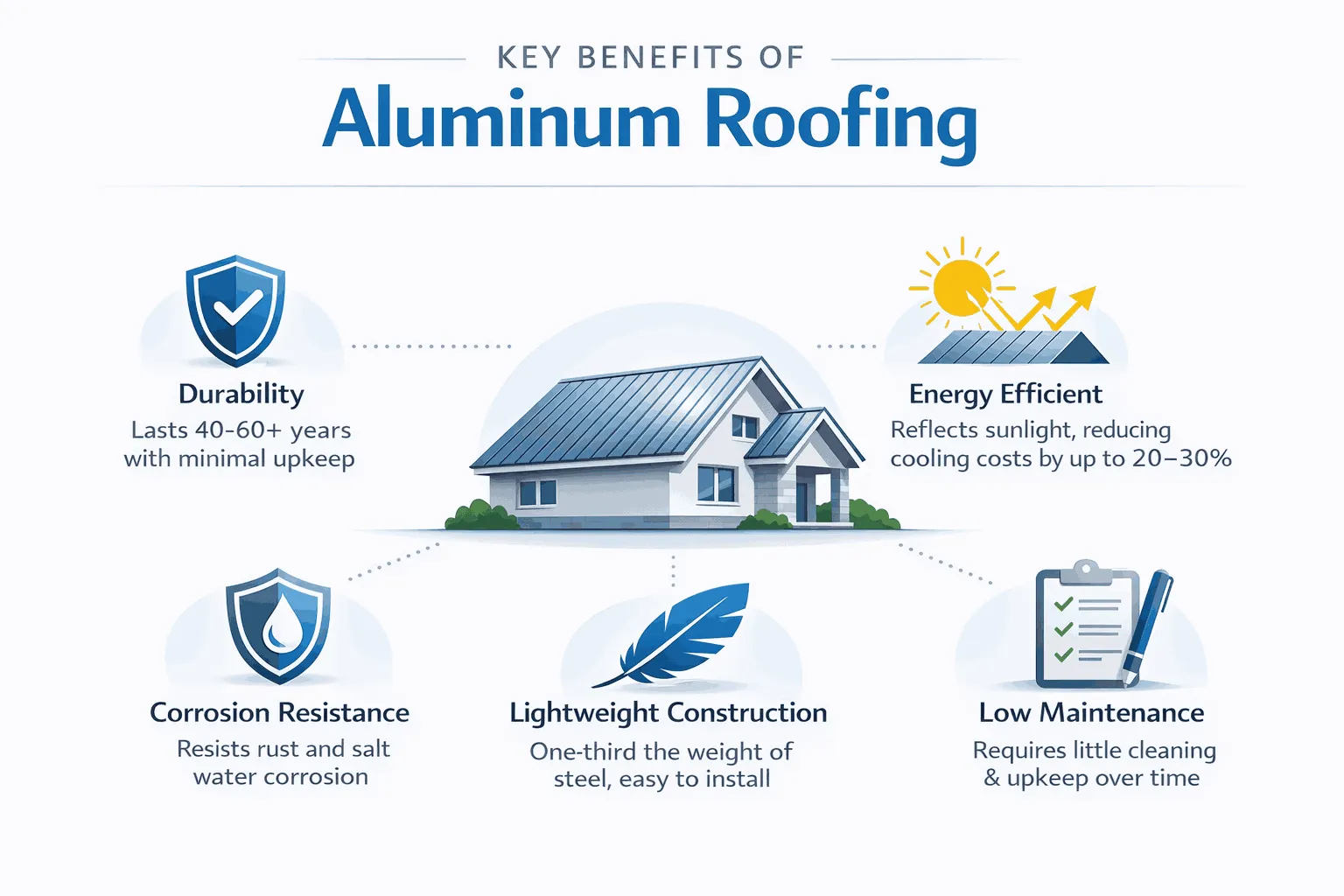
Aluminum roofing offers a wide range of benefits that make it an excellent choice for both residential and commercial properties.
Exceptional Durability
One of the biggest advantages of aluminum roofing is its remarkable lifespan. When properly installed and maintained, aluminum roofs can last 40 to 60 years or more.
Unlike traditional roofing materials, aluminum does not:
-
-
Crack
-
Warp
-
Rot
-
Rust
-
This makes it particularly well-suited for areas that experience heavy rain, snow, wind, or salt air exposure.
Because aluminum roofing systems are highly resistant to environmental damage, they often require fewer repairs over their lifetime compared to asphalt or wood roofing materials.
Lightweight Construction
Aluminum is significantly lighter than many other roofing materials. In fact, it weighs about one-third as much as steel.
This lightweight structure provides several advantages:
-
-
Reduced structural load on the building
-
Easier transportation and handling
-
Faster installation process
-
Lower stress on older building structures
-
Because aluminum is so lightweight, it can often be installed over existing roofing systems without requiring major structural modifications.
Energy Efficiency
Aluminum roofing is known for its excellent energy-reflective properties.
Unlike traditional roofing materials that absorb heat, aluminum reflects a significant portion of sunlight away from the building. This reduces heat transfer into the interior of the structure.
When combined with reflective coatings or cool-roof colors, aluminum roofing can:
-
-
Lower indoor temperatures
-
Reduce reliance on air conditioning
-
Decrease energy consumption
-
In warmer climates, reflective metal roofing systems may reduce cooling costs by up to 20–30 percent.
Weather Resistance
Aluminum roofing systems are designed to withstand extreme weather conditions.
They perform well in:
-
-
Heavy rainstorms
-
Snow and ice
-
Strong winds
-
Hail storms
-
Coastal salt exposure
-
Metal roofing systems also provide excellent fire resistance, which can add another layer of safety for your property.
Environmentally Friendly Material
Aluminum is one of the most sustainable construction materials available today.
Many aluminum roofing systems are manufactured using recycled aluminum, and the material itself is fully recyclable at the end of its lifespan.
This makes aluminum roofing an environmentally responsible choice for property owners looking to reduce their environmental impact.
Additionally, the energy efficiency of aluminum roofs contributes to reduced energy consumption, which further supports sustainability goals.
Low Maintenance Requirements
Compared to many other roofing materials, aluminum roofing requires minimal maintenance.
Because aluminum naturally resists corrosion and environmental damage, it does not require frequent painting, sealing, or repairs.
Most aluminum roofs only require:
-
-
Occasional cleaning
-
Periodic inspections
-
Minor fastener adjustments if necessary
-
This low maintenance requirement makes aluminum roofing a convenient option for property owners who want a durable roof without ongoing upkeep.
Aluminum Roofing Installation Process
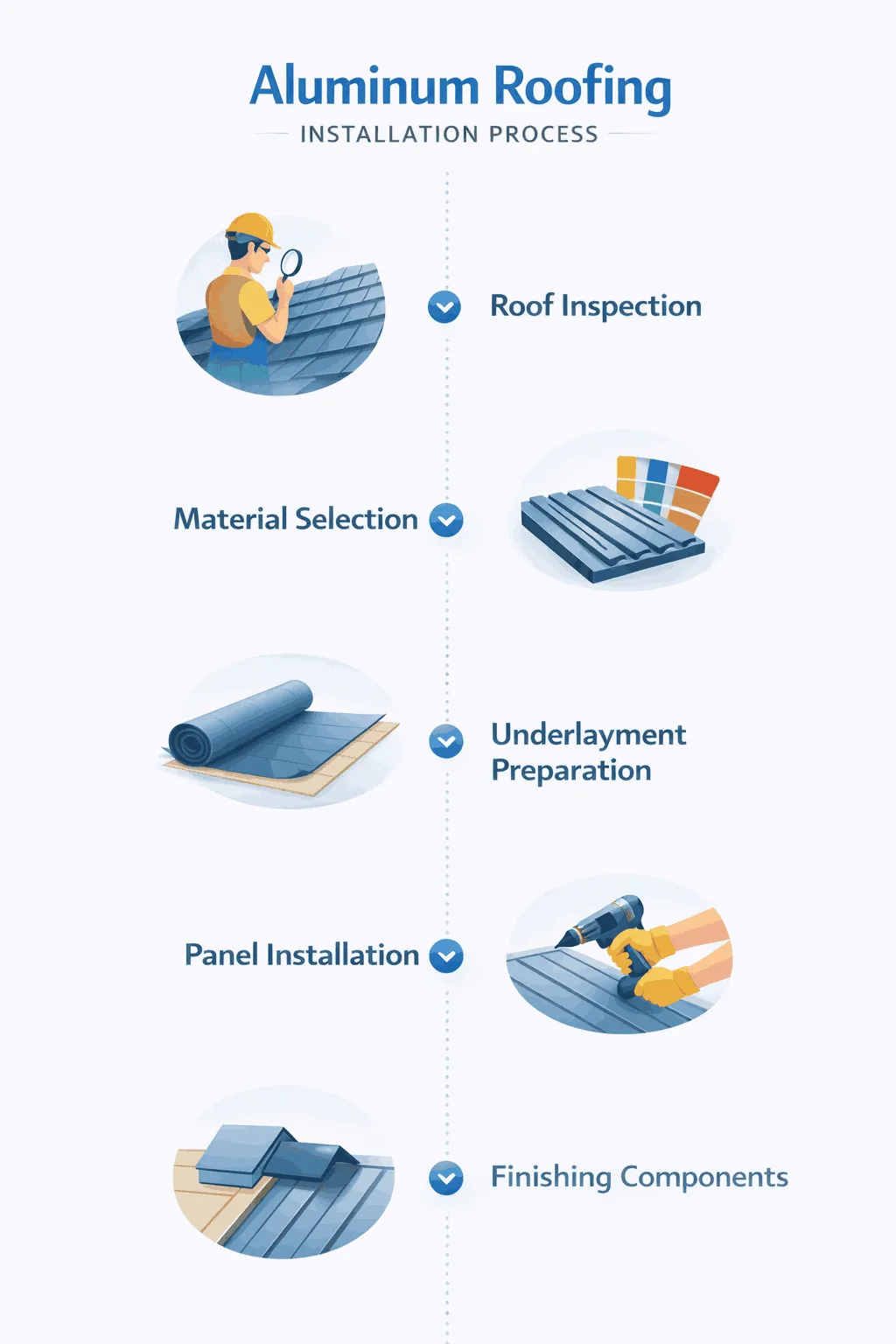
Installing an aluminum roofing system requires professional expertise and proper techniques to ensure long-term performance.
At MK Best Roofing, we follow a structured installation process to ensure every aluminum roofing project meets the highest quality standards.
Roof Inspection and Assessment
Before installation begins, our roofing specialists perform a thorough inspection of the existing roof structure.
This assessment evaluates:
-
-
Roof slope and drainage
-
Structural integrity
-
Ventilation requirements
-
Existing roofing materials
-
This step helps determine whether the existing roof can support the new aluminum roofing system.
Material Selection and Design
Next, we help property owners select the most suitable aluminum roofing style, including:
-
-
Panel type
-
Color options
-
Protective coatings
-
Insulation systems
-
Choosing the right materials ensures the new roof complements the building’s appearance while meeting local building codes.
Roof Preparation
Before installing aluminum panels, the roof surface must be properly prepared.
This may involve:
-
-
Removing old roofing materials
-
Repairing roof decking
-
Installing waterproof underlayment
-
Adding insulation layers
-
Proper preparation is essential to ensure long-term performance and moisture protection.
Panel Installation
Once the roof is prepared, aluminum panels or shingles are installed using specialized fasteners and seam-locking systems.
Professional installation ensures:
-
-
Secure panel attachment
-
Proper alignment
-
Effective waterproof sealing
-
Strong wind resistance
-
Precision during this stage is critical for preventing leaks and maximizing roof lifespan.
Finishing Components
The final stage of installation includes adding essential components such as:
-
-
Flashing around chimneys and vents
-
Ridge caps along the roof peak
-
Proper ventilation systems
-
These finishing elements help maintain airflow and prevent moisture buildup inside the roofing system.
Once installation is complete, the aluminum roof is ready to provide decades of protection and performance.
Aluminum Roofing Costs and Long-Term Value
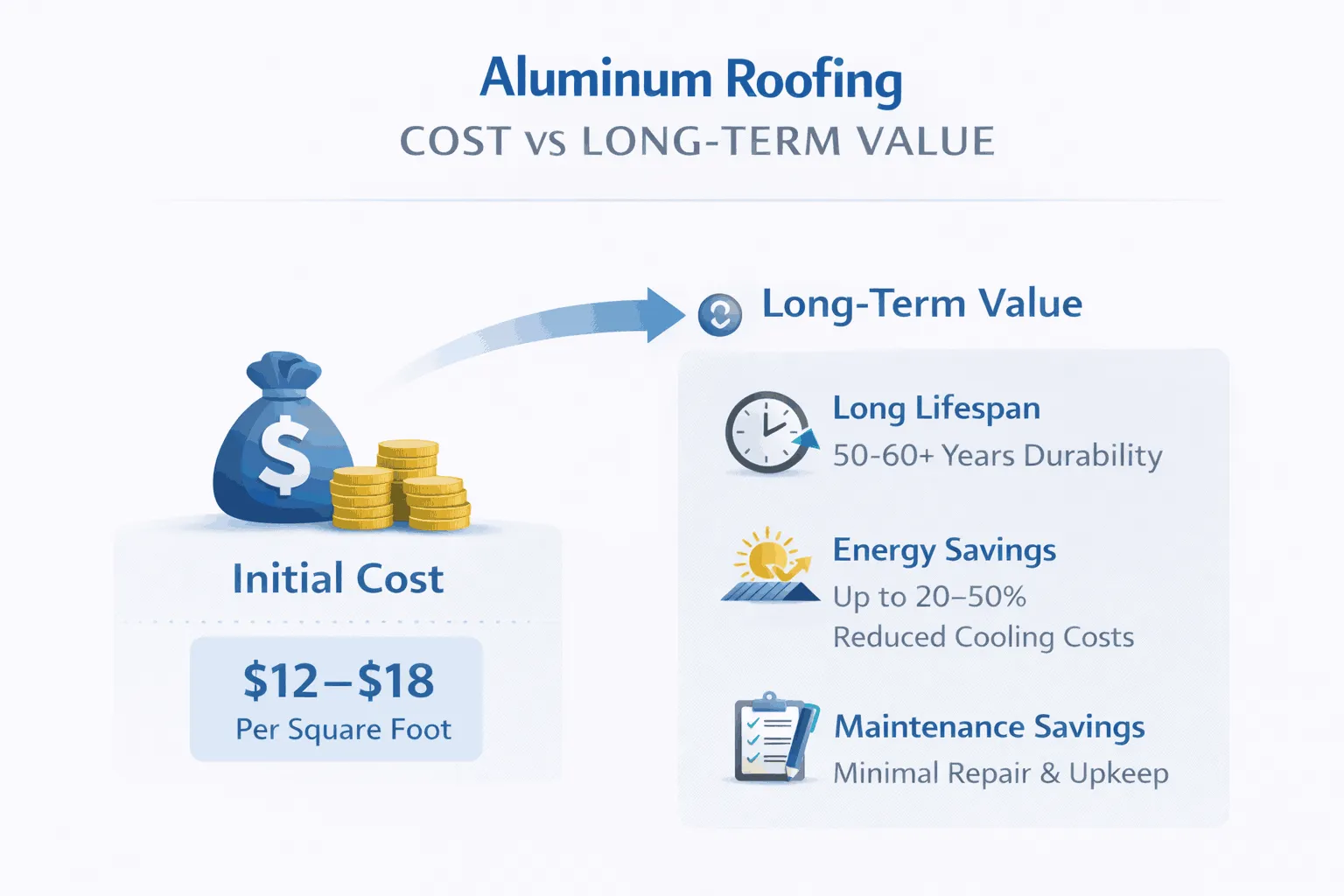
The initial cost of aluminum roofing is generally higher than traditional asphalt shingles. However, the long-term benefits often outweigh the upfront investment.
Average Cost of Aluminum Roofing
The typical cost range for aluminum roofing includes:
Material costs: $7 to $12 per square foot
Installed costs: $12 to $18 per square foot
The final price can vary depending on several factors.
Factors That Influence Roofing Costs
Several elements can affect the overall cost of an aluminum roofing project:
-
-
Roof size and complexity
-
Roof slope and accessibility
-
Type of aluminum roofing system
-
Protective coatings and insulation
-
Local labor costs and building codes
-
Because every roofing project is unique, a professional inspection is the best way to determine accurate pricing.
Long-Term Financial Benefits
Although aluminum roofing may cost more initially, it often provides significant long-term savings.
Key financial advantages include:
-
-
Extended lifespan of 50–60 years or more
-
Lower maintenance costs
-
Improved energy efficiency
-
Reduced need for roof replacements
-
Over time, aluminum roofing can actually be more cost-effective than asphalt shingles or wood roofing systems.
Maintenance Tips for Aluminum Roofing
Aluminum roofing is known for its low maintenance requirements, but occasional care can help maximize its lifespan and appearance.
Regular Inspections
It is recommended to inspect your roof at least once or twice per year.
Look for:
-
-
Loose fasteners
-
Damaged flashing
-
Debris buildup
-
Catching minor issues early can prevent more significant problems later.
Keep Gutters Clean
Clogged gutters can cause water to accumulate near the roof edges.
Regularly cleaning gutters and downspouts ensures proper drainage and prevents water damage.
Gentle Cleaning
If dirt or stains appear on the roof surface, they can usually be removed with water and a mild cleaning solution.
Avoid using abrasive tools or harsh chemicals that could damage protective coatings.
Trim Nearby Tree Branches
Overhanging branches can scratch the roof surface or drop debris that accumulates over time.
Keeping nearby trees trimmed helps protect the roof and maintain its appearance.
Schedule Professional Inspections
Professional roofing inspections once a year can help identify potential issues before they become costly repairs.
At MK Best Roofing, our team provides expert inspections and maintenance services to keep aluminum roofing systems performing at their best.
Why Aluminum Roofing Is Ideal for Coastal Areas
Coastal regions present unique challenges for roofing materials due to high humidity, salt exposure, and strong storms.
Aluminum roofing is particularly well suited for these environments because:
-
-
It resists corrosion caused by salt air
-
It handles moisture exposure without rusting
-
It withstands strong winds and storms
-
It maintains structural integrity for decades
-
For property owners in Long Island and other coastal communities, aluminum roofing provides an ideal combination of durability, reliability, and long-term performance.
Conclusion
Aluminum roofing is far more than just another metal roofing option. It is a durable, energy-efficient, and environmentally friendly roofing solution that offers exceptional performance for both residential and commercial properties.
With benefits such as corrosion resistance, lightweight construction, energy savings, and a lifespan that can exceed 50 years, aluminum roofing has become one of the most trusted roofing materials available today.
For property owners in Long Island and surrounding areas, aluminum roofing offers reliable protection against coastal weather conditions while enhancing the overall value and efficiency of your building.
At MK Best Roofing, we specialize in professional aluminum roofing installation backed by quality craftsmanship and premium materials. Whether you are planning a roof replacement or building a new property, our experienced team is committed to delivering roofing solutions that stand the test of time.
Contact MK Best Roofing today to schedule your consultation and learn how aluminum roofing can provide long-lasting protection, efficiency, and beauty for your property.