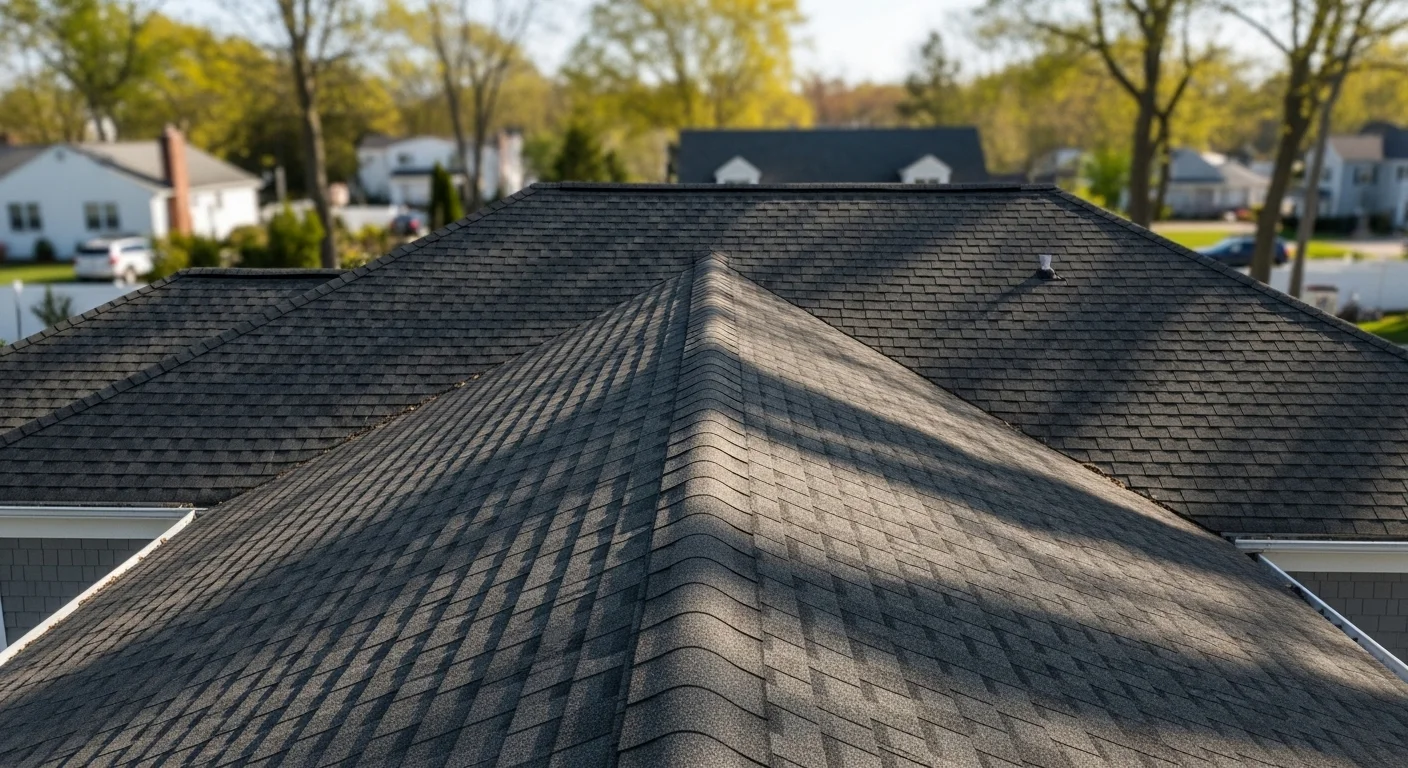
When you begin the process of planning a new roof replacement or installation, you will discover that there are lots of specifications beyond shingle color. Roof Pitch is the most basic, yet commonly misinterpreted element of a roof.
The pitch of your roof is the angle at which it rises from its lowest to its highest point. It is an essential engineering consideration because it determines the appropriate roofing materials needed for your home, and how much material will sit at an angle. If your angle is not right, you will suffer leaks, water damage,and early roof failure.
For homeowners who need deeper specifications, this resource on Minimum Slope for Shingles offers additional insight into manufacturer standards and installation best practices.
This guide will simplify the science of roof pitch, outline minimum asphalt shingle requirements, and illustrate specifically why this specification is so critical for a sound, sustainable roof system.
What is Pitch in Shingle Roofing?
The roof pitch is how steep the roof is. It measures the rate at which the roof is rising vertically versus running horizontally.
How Pitch is Expressed
Roof pitch is typically an inch indication of how steep a roof slopes.
- Rise: The vertical height of the roof over a horizontal distance.
- Run: The horizontal distance the roof covers, almost universally standardized to 12 inches.
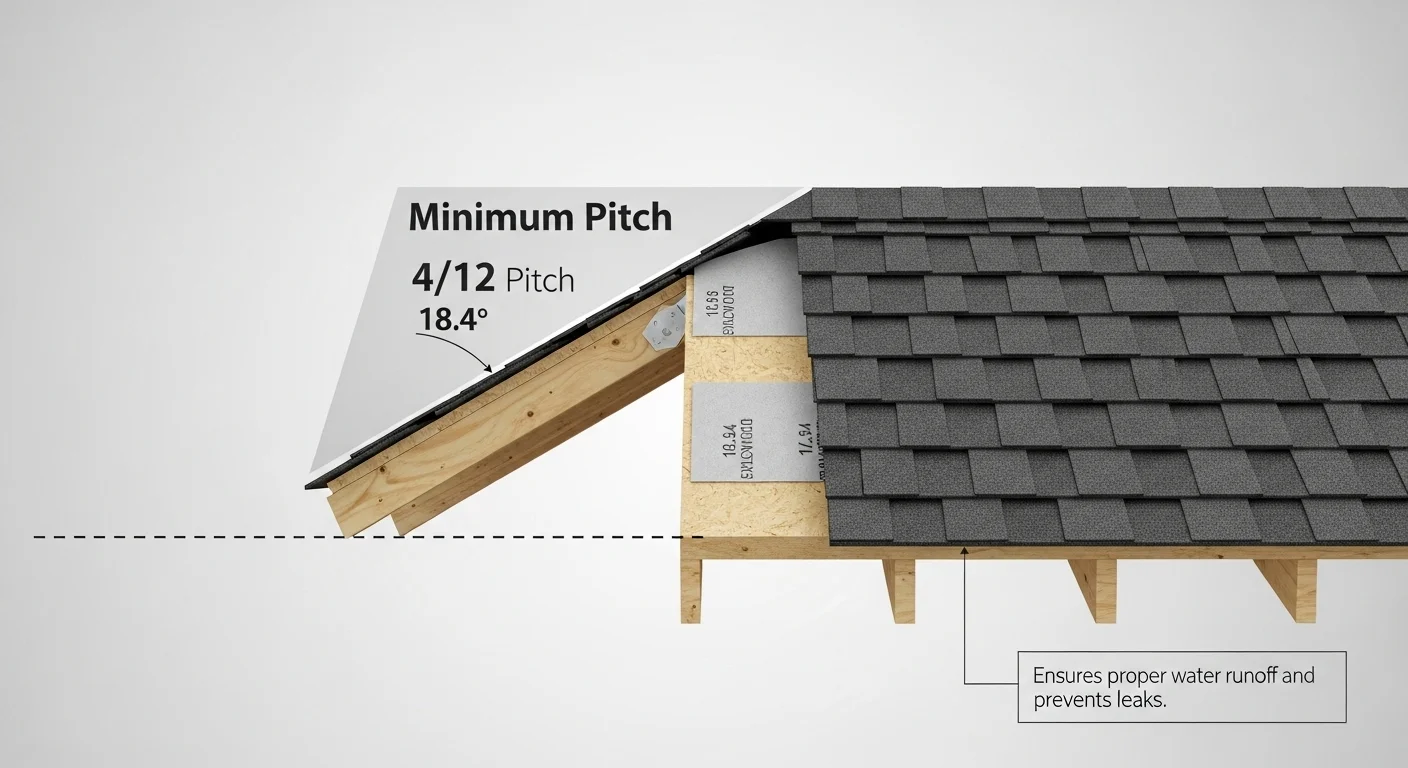
A typical roof will be referred to as a 4/12 pitch, for instance. That is, for every run of 12 inches along the ground (run), it rises 4 inches into the air (rise). Other standard pitches are 6/12 (steeper) or 2/12 (very low).
Pitch vs. Angle
Pitch is actually a ratio of 4/12, while angle is measured in degrees. The pitch ratio is also a much more usable number for roofers, as it gives real-world insight into how materials are applied and water flows.
Minimum Pitch for an Asphalt Shingle Roof
The pitch of your roof will directly affect which material you choose for your roofing. Asphalt shingles, the most popular residential roofing material in America, have minimum requirements established by manufacturers and local building codes to perform.
1-The Standard Minimum:
Standard manufacturers require a minimum roof pitch of 4/12. At this tilt, and greater, water doesn’t pool or penetrate; gravity and wind do all the work to dry it quickly off a surface.
2-The Low-Slope Exception:
Pitched roofs with slopes of 2/12 to 4/12 are referred to as “low-slope” roofs. The standard method of shingle installation is not allowed in this range; however, regular asphalt shingles can still be used, provided they meet specific upgraded underlayment requirements.
- Double Underlayment:
For slopes less than 4/12, yet still at least 2/12, it is common in much of the American southwest for two layers of underlayment (usually 15# or 30# felt, high-quality synthetic) to be put down over the entire roof deck.
- Overlapping Method
These layers must be applied in a specific manner, typically with a 19-inch side lap (overlapping by 19 inches) to create a continuous, multi-layered water barrier beneath the shingles. This is a crucial modification to compensate for the reduced drainage effectiveness of the shallower slope.
3-The Absolute Minimum:
Most industry standards require a bare minimum pitch of 2/12 for any shingle, including over modified underlayment. Slope less than 2/12 does not allow shingles proper opportunity to adequately drain and therefore requires alternative roofing materials, such as mineral rolled roofing (or modified bitumen) or single ply membrane.
Why Minimum Roof Pitch Matters for Shingle Performance
The minimum pitch is not an arbitrary rule; it is an engineering requirement rooted in how shingles function to keep water out.
The Shingle Overlap System
Asphalt shingles rely on an overlapping, gravity-driven system. Each shingle protects the fasteners (nails) holding the shingle below it.
- Standard Pitch (4/12 and up):
Water flows quickly over the exposed shingle surface, preventing it from having enough time to soak into the material or work its way laterally up and under the shingle edges and into the nail holes. The shingle’s seal and overlap are highly effective here.
- Low Pitch (Below 4/12):
When the slope is shallow, water moves slowly. This gives it more time to penetrate the shingle via absorption or, critically, to be driven horizontally and upwards by wind (wind-driven rain) or surface tension (capillary action) beneath the overlaps.
Manufacturer Warranty and Building Code Compliance
Using shingles below the recommended pitch or failing to apply the enhanced underlayment for low-slope applications will immediately void the shingle manufacturer’s warranty. Furthermore, most local building codes strictly enforce these minimum pitch requirements for residential shingle installations. Ensuring compliance is essential for the long-term protection and resale value of your home.
Can You Use Shingles on a 1/12 Pitch Roof?
A 1/12 pitch roof has an angle so shallow that it is functionally a flat roof as far as drainage is concerned.
Why Shingles Fail at 1/12
At this pitch, water drainage is dictated more by surface and wind than by gravity.
- Standing Water: A 1/12 pitch is highly susceptible to ponding (standing water). Even minor deflections in the roof deck will cause water to pool. Shingles are designed to shed water, not to withstand constant saturation. Constant pooling will lead to accelerated shingle damage, rapid granule loss, and saturation of the underlying deck.
- Capillary Action: Capillary action, where water is drawn into small spaces against the force of gravity, is highly effective on shallow slopes. Water will be easily drawn up and under the shingle overlaps and directly into the roof system.
The Correct Material for 1/12 Pitch
If your roof has a pitch of 1/12, you must use a specialized roofing system designed for flat or low-slope applications:
- Modified Bitumen (Mod-Bit):
A durable, rolled asphalt product that is self-adhering to create a fully sealed, seamless surface.
- Single-Ply Membranes:
Materials like EPDM (rubber), TPO (thermoplastic polyolefin), or PVC (polyvinyl chloride) create a large, waterproof, monolithic sheet that is either mechanically fastened, adhered, or ballasted. These systems are specifically designed to handle ponding water and minimal pitch.
Roof Pitch and Water Drainage: Why It Matters for Shingles
The correlation between the pitch of a roof and its ability to drain away water efficiently is crucial to the value of your shingle roof.
Velocity of Runoff
The steeper the roof pitch, the faster water travels as it runs down a roof. Two things make this speed necessary:
- Faster water runoff keeps more of the roof shingle surface exposed and away from water to help prevent growth from happening.
- Velocity can clear off small debris, dirt, and even biological growth (slime, algae, moss spores) that clog your gutters, which could result in mini dams.
Ice Dam Prevention
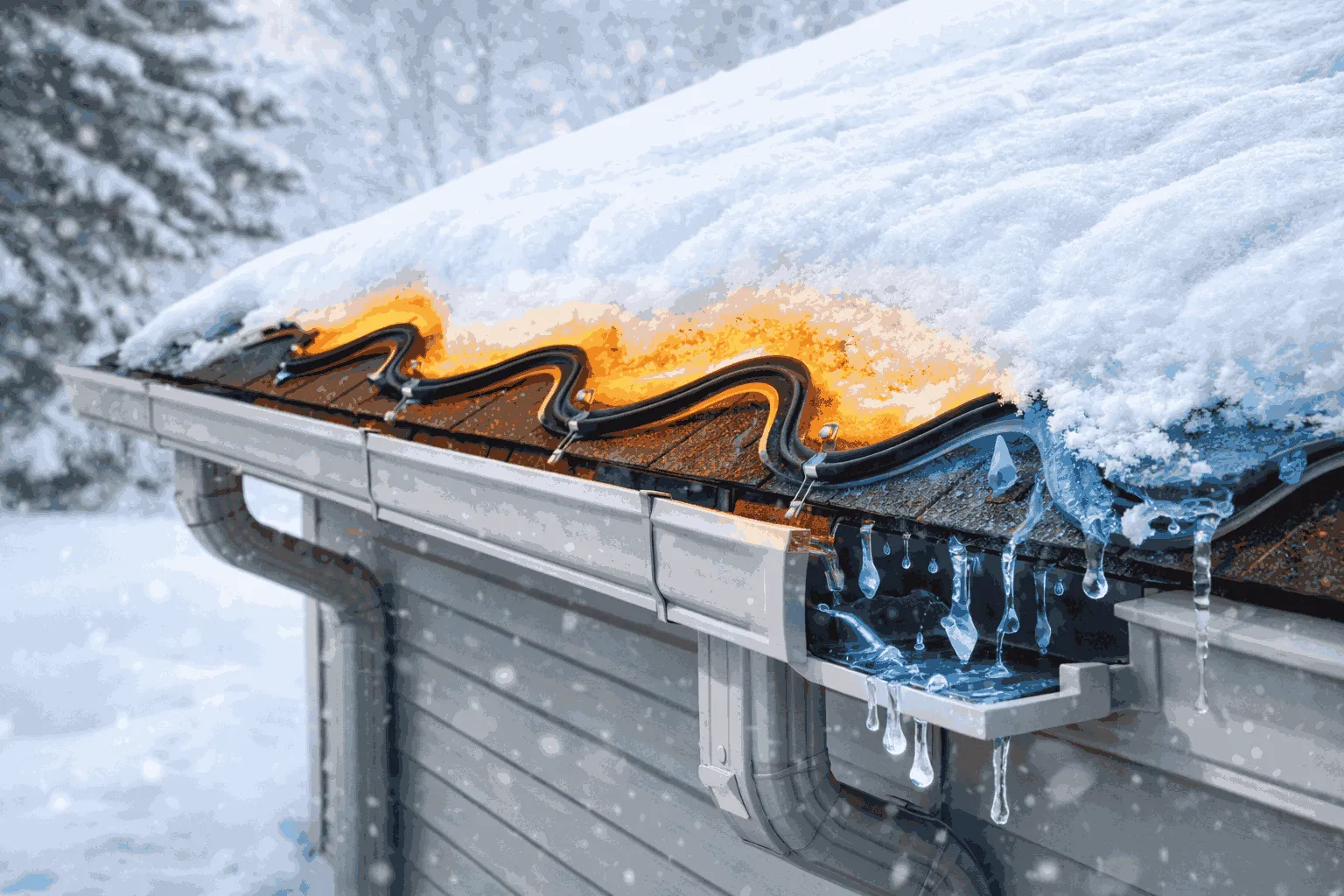
In snowy and freezing climates, roof pitch also affects how effective your roof is at preventing ice dams.
Low Slope Pitches: Snowmelt on low slope pitches tends to freeze faster at the colder eaves, creating an ice dam. This dam retains the water, which then backs up under shingles and causes leaks.
A steeper pitch (e.g., 8/12 or 10/12) allows the roof to shed snow more easily, reducing the overall snow load. When melting does occur, the faster water runoff is less likely to refreeze before reaching the gutter.
For all roofs, especially those in cold climates, we always install Ice and Water Shield along the eaves, valleys, and penetrations to offer an added layer of protection against backup from ice dams.
Roof Ventilation and Pitch: What Homeowners Should Know
The performance of your roofing material is always linked to the ventilation system, and the roof pitch directly influences how ventilation is installed and how effectively it works.
Airflow Dynamics
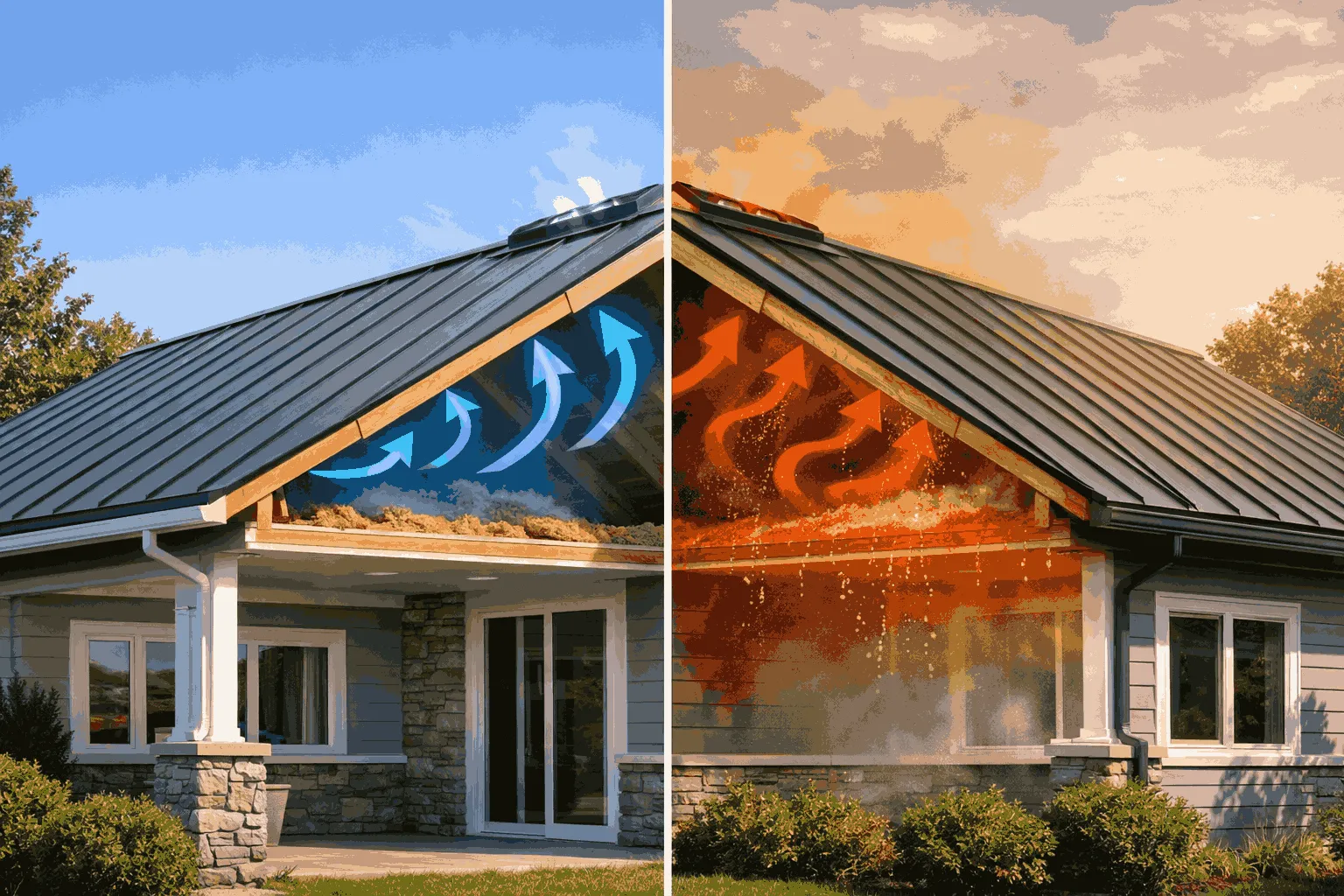
A healthy roof system requires continuous airflow from the (intake) up to the (exhaust) to remove heat and moisture from the attic space.
- Steeper Pitches: Steeper pitches create a larger, more voluminous attic space, which often allows for better natural convective airflow. Ridge vents and soffit vents can work very efficiently, as the thermal stack effect (rising hot air) is maximized.
- Low Pitches: On low-slope roofs (under 4/12), the attic or rafter space may be very shallow. This tight space makes installing traditional ridge venting challenging and can restrict the continuous flow required. Proper ventilation here often necessitates specialized low-profile ridge vents or box vents combined with meticulous insulation baffling to prevent insulation from blocking the needed air channels.
The Shingle-Ventilation Connection
Poor ventilation allows heat to build up in the attic, which superheats the underside of the roof deck and the shingles. This causes two main problems:
- Accelerated Aging: High heat bakes the asphalt in the shingles, making them brittle and accelerating granule loss.
- Seal Failure: The heat causes the thermal sealing strip on the shingles to over-adhere or crack, drastically shortening the roof’s lifespan.
Regardless of the pitch, the ratio of Net Free Area (NFA) for ventilation must be maintained (typically a 1:300 ratio of vent area to attic floor area, or1:150 in poorly insulated attics). Consulting with an expert to tailor the ventilation system to your specific pitch is essential.
Conclusion
Roof pitch is the unseen hero of your roofing system. It dictates the primary defense mechanism of gravity-driven water shedding and is the first specification that any reputable roofer must consider.
For homeowners considering asphalt shingles, remember:
- 4/12 and Above: Standard shingle installation is appropriate and highly effective.
- 2/12 to 4/12: Shingles are acceptable only with a doubled, fully overlapped underlayment system.
- Below 2/12: Shingles are strictly prohibited; specialized flat roofing materials are required.
Choosing the right materials for your pitch ensures warranty compliance, maximizes water protection, and guarantees the longest possible lifespan for your investment. Don’t compromise this fundamental specification.
At MK Best Roofing, we begin every project with a detailed assessment of your roof’s pitch and ventilation needs, ensuring the materials and installation methods used are perfectly matched to your home’s unique specifications and local building codes.
Ready to start your roofing project with confidence? Contact the experts at MK Best Roofing for a professional roof pitch assessment and installation consultation.